
Document workflow is how files and forms flow from one step to another in a business. A lot of teams employ document workflow to ensure work is transparent and streamlined. A really good workflow reduces errors and saves time.
Online systems allow groups to follow changes, assign tasks, and save files together. Almost every team wants to make it easy to share, sign, and store files. Later, the post demonstrates how to make document workflow more enjoyable for your daily work.
Beyond Administrative Chaos
Disorganized document workflows bog teams down. When files get scattered between emails, hard drives, and cloud folders, we lose time and miss deadlines. Manual document preparation can consume 76% of labor costs, turning what should be a quick digital job into an open-ended slog.
Employees waste roughly half their day searching for documents, and every search consumes almost 18 minutes. These inefficiencies compound, resulting in lost data and opportunities for growth.
The Freelancer Reality
Freelancers balance myriad clients, files, and deadlines on their own. They tend to depend on email chains or fragmented folders, which is a huge timesink and error vector. When time is money, digging for contracts or old edits could mean lost revenue or unhappy customers.
Document workflows beyond administrative chaos. Automation tools will take care of silly repetitive work, like sending invoices or keeping track of signed contracts so we have more time for billable work. With a clear system, freelancers can deliver files on time, build trust, and experience more repeat business.
A Structured Approach
| Component | What It Does | Benefit |
| Central Repository | Stores all documents in one spot | Easy access, less loss |
| Version Control | Tracks document changes | Avoids confusion |
| Review & Approval Tools | Supports feedback and sign-offs | Faster turnaround |
| Automation Scripts | Handles routine tasks | Saves time, less errors |
No administrative chaos beyond. Tools that visualize work at each stage make bottlenecks easy to identify and clear. When we’re all doing the same steps, projects run smoothly, and flubbers plummet!
The Automation Myth
They assume workflow automation is too expensive or impractical to use. Actually, automation makes things easier. For instance, invoice processing can decrease from ten days to two, and HR can reduce admin time by seventy-five percent.
Automation doesn’t kill jobs; it clears busywork, so people can do work that requires a human touch. With over ninety-nine percent accuracy from smart data tools and effortless processing of millions of documents, real-world gains are tangible. Global markets indicate this transition is just gaining momentum.
Unlocking Freelance Freedom
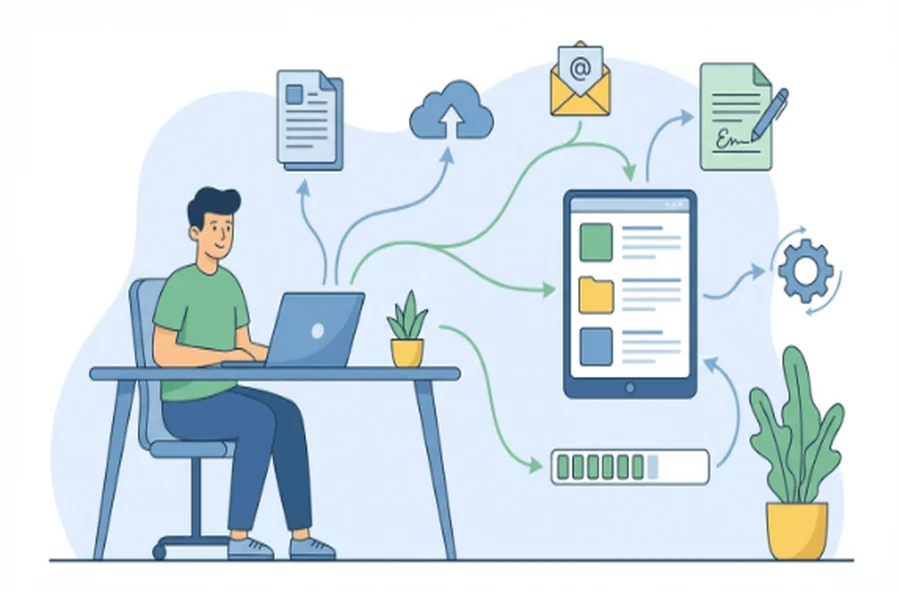
A solid document workflow can take a huge burden off freelancers’ shoulders. It opens up a road for innovative work and allows folks to spend less time hunting down documents or nagging invoices.
Fundamentally, a clean workflow implies more focus on paid work, increased client confidence, and a more secure business down the road. If you’re solo or a small team, these systems can be the difference between madness and zen.
1. Reclaim Billable Hours
Automation takes care of repeat work such as file naming, archiving, or invoicing, which reduces wasted time. Freelancers who log their doc work frequently identify trends; perhaps they’re spending too much time searching for agreements or refreshing customer folders.
Document management software, such as cloud-based systems, pulls invoicing, billing, and file storage into a single location, so you’re not wasting time piecing together hours at month’s end.
By establishing real deadlines for paperwork, like sending out invoices at the end of each project, you not only keep your work more regular but also reduce last-minute stress.
2. Enhance Client Trust
Clients want to know that files are being handled fast and accurately. If a freelancer delivers the appropriate contract or design proof promptly, it communicates concern and trustworthiness.
Transparency around status updates, such as informing a client when a file or invoice is sent, keeps everyone aligned.
Secure tools to share files, encrypted links for example, make clients feel their info is safe. Quick updates on document status foster powerful, enduring relationships.
3. Fortify Financial Health
Good file management facilitates tracking payments, expenses, and taxes. Good records help with compliance and audits, which is crucial for freelancers in many nations. Automated invoicing means you receive payment more quickly and identify late payments sooner.
With improved tracking and less manual work, freelancers can monitor profits more closely and reduce expensive errors, which is crucial for anyone accustomed to the highs and lows of freelance revenue.
4. Mitigate Project Risks
Lost contracts, missed deadlines, or misfiled briefs can sink a project. Defined document workflows prevent mix-ups, so everyone understands what’s due and when. Process audits, such as a file naming or file storage review, can catch risks before they become big.
Writing things down, from project scopes to feedback, provides a transparent record in case questions arise later. A clever workflow lets freelancers detect issues before they arise and establishes trust with clients.
5. Create Scalable Systems
Planners will be able to take on additional work without it spiraling into madness. Automation-powered workflows scale as your client list scales, so the quality remains high even when things get hectic.
Modular document systems allow you to plug in and remove tools as you require, so you never outgrow your setup. Checking in on your workflow every few months ensures it still fits your business and lets you adjust it as things evolve.
The Modern Freelancer’s Toolkit
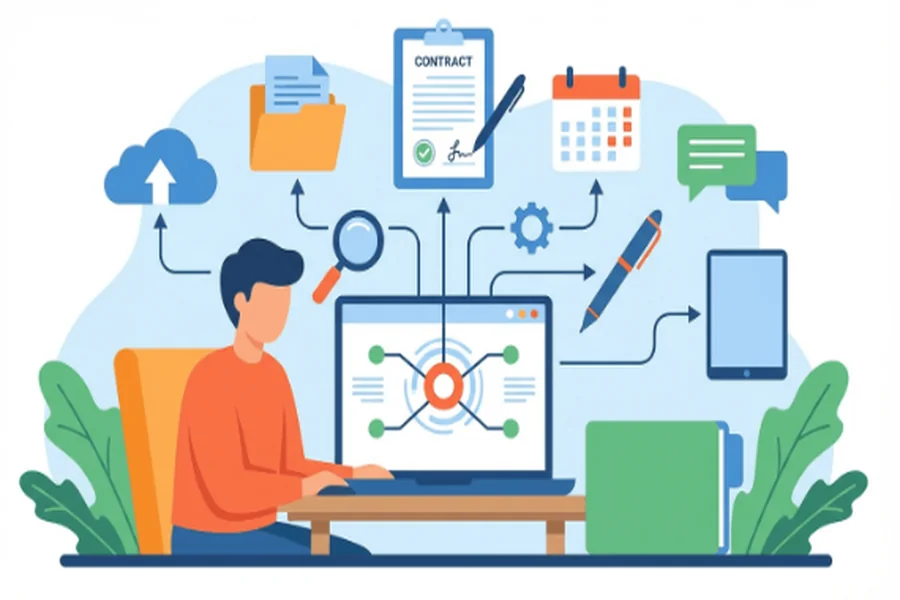
Today’s freelancers juggle multiple projects, sometimes for clients around the world. Smooth document flow is central to this system. The right set of tools can make or break your productivity, security, and communication.
1.Cloud storage for anytime access
2. Project management apps for tracking work
3. Document creation and editing platforms
4. Secure payment solutions
5. Communication and collaboration tools
6. Password managers for online security
7. AI-powered utilities for content and workflow automation
8. Digital signature services
Document Creation
Templates provide a quick way to keep branding and language consistent across all work. Document generation tools help with repeat tasks like contracts or invoices, which saves time and reduces mistakes.
Real-time editing allows teams and clients to provide feedback simultaneously while keeping everyone on the same page. Version control ensures that no one accidentally overwrites a completed draft, and previous edits are simple to monitor.
Seamless Collaboration
Shared folders and the cloud enable teams to collaborate without concern of version confusion. Messaging apps and whiteboard platforms keep ideas fluid even when people work in different time zones. Clearly defined roles prevent overlap and friction that clog the workflow. Nice collaboration tools include project boards to follow every step.
Effortless Conversion
Freelancers tend to receive files in a variety of formats. Document Conversion tool helps you flip between DOCX, PDF, XLSX, or even images with a click. Automating these changes prevents errors and accelerates distribution. Online converters plug the holes where desktop apps fail to deliver. Integrating these tools into your workflow results in less overhead.
Secure Storage
Sensitive papers require strong locks. Cloud storage with end-to-end encryption protects files from exposure. Access controls determine who can view or modify what. Password managers store login information securely. Frequent backups ensure that a hardware crash or hack won’t delete weeks of labor.
Digital Signatures
Digital signatures reduce approval times and operate globally. They’re legal in most industries, providing definitive evidence of who signed and when. E-signature tools fit naturally into document workflows, so sign-offs don’t lead to bottlenecks. Clients familiar with the power of e-signing have more trust in the process.
Crafting Your Personal Workflow
A personal document workflow simply means describing what is done with each assignment, when it begins and ends, and who does each step. It’s an attitude and a habit that keeps freelancers and teams on track, trims waste, and creates space to improve.
By tracking and tweaking your workflow, you will identify what works, repair what doesn’t, and experience consistent improvement in how you work.
Identify Bottlenecks
First, audit your current flow end-to-end. Where are you waiting on others? Which steps inevitably go late? Request candor from teammates, as they observe problems you may overlook. Sketch out each step with simple process mapping.
This reveals where they bog down. Probe for holes, such as extended lead times for approvals or lost documents. Once you know the slow spots, test simple fixes, like sharper deadlines or automation. For instance, use software that automatically sends tasks for review rather than hunting down email threads.
Map Your Process
Outlining your own steps makes sense of the journey papers follow. Flowchart, it even a whiteboard or app-based flowchart, every step from creation to archiving. Designate roles to each stage, so every individual understands their responsibility. Digital mapping tools allow you to refresh your map when they shift. These tools simplify shifting steps or adding new people if your workflow expands.
Select Your Tools
Select tools that suit your requirements, not simply what’s trendy. Make sure the software supports your file types, integrates with your existing apps, and protects your data. Shop around for prices and features, and leverage free trials to test what suits you.
It provides good tools to make sharing, editing, and storing documents smooth and secure. Choose ones that enable your team to collaborate, control revisions, and save time.
Standardize with Templates
Template your work to keep it tidy and save time. With everybody working off the same lead sheet, mistakes fall, and you receive a consistent appearance through all files. Switch templates as projects move or rules change. Thanks to custom templates, you can customize them for various assignments while maintaining the fundamentals intact.
Test and Refine
Run your workflow and look for snags. Query your team about what feels awkward or sluggish. Use software to track each task’s time and identify patterns. Change one thing at a time. See if it helps. Continue keeping your workflow fresh by adjusting your inputs and outputs to fit your needs.
Navigating Digital Complexities
Dealing with digital clutter is no easy task, particularly for freelancers who handle various assignments and clients. Today’s challenges extend far beyond file storage. The added stress of keeping up with evolving tools, cryptic deadlines, and compliance requirements is significant.
Security and compliance have become paramount as sensitive information passes through these digital mechanisms on a daily basis. Some spend as much as half their workweek just looking for files, and delays induced by bad workflows are industry-wide.
The AI Co-Pilot
AI cuts through document chaos. Intelligent algorithms can tag, sift and retrieve documents in seconds, cutting the time spent searching for critical items. Other AI-powered tools read and extract data from invoices or contracts more accurately than a human, saving hours of tedious work.
These technologies aren’t just accelerating tasks; they’re eliminating errors, which is key for compliance and client confidence. With AI embraced, freelancers and teams can spend time on higher-value work, not just file-shuffling.
Evolving Security
Digital workflows require new methods to protect papers. Cutting-edge capabilities such as encryption, multi-factor authentication, and automated access controls assist in securing sensitive information.
Make sure to check with regular security scans to find holes before they are dangerous. With threats evolving, this latest update on best practices keeps files secure and maintains compliance. Cloud-based platforms further facilitate secure sharing and backup, a necessity for hybrid and remote teams.
Measuring True ROI
| KPI | What it Measures | Why It Matters |
| Processing Cost | Direct expenses per workflow | Tracks cost savings |
| Processing Time | Average time for task completion | Shows efficiency gains |
| Compliance Rate | Adherence to regulations | Lowers risk |
| User Adoption | Platform usage rates | Gauges engagement |
Tracking these KPIs with analytics tools provides organizations a clear picture of what succeeds. These regular reviews allow teams to identify areas for optimization and ensure their investments in document management utilities continue to yield returns without needless overhead.
The Human-Automation Balance
Mixing humans and automation defines the topline document flow. The right mix means teams can stop riffing on trivial tasks and riff where it counts. That means approvals accelerate, billing closes earlier, and errors are identified before they become expensive.
Most high-performing workflows use a routed system. Automation does the heavy lifting, but humans intervene when critical decisions or approvals are required.
Do’s Automate the repetitive, high-volume stuff.
1.Have clear points for human oversight.
2. Build feedback loops for process enhancements.
3. Begin small and increase automation as trust develops.
4. Select tools that complement your existing systems.
Don’ts: Don’t automate tasks requiring complicated judgment.
1.Don’t omit human review at key steps.
2. Don’t dismiss internal input.
3. Don’t implement automation without adequate testing.
When to Automate
1.Standard data entry is best automated where inputs follow a clear format, like invoice processing.
2. File routing: Documents that need to move between teams or systems work well with automated triggers.
3. Notifications: Reminders and status updates sent automatically keep teams informed.
4. Version control: Automation ensures everyone works from the latest file and avoids confusion.
About: The Human-Automation Balance. Automating repetitive work recovers time. A team can waste 60% of its day just looking for files. Automation can halve admin time and quadruple billing speed. Always balance time, cost, and how the change impacts the entire flow of work.
When to Intervene
If a document requires expert judgment or has sensitive information, humans have to check the work. QC is critical because contract or compliance errors can do real damage. Establish human review checkpoints for significant approvals or legal sign-offs. Flexible workflows allow humans to intervene when they are needed, such as when things change or automation cannot capture context.
Building Feedback Loops
Feedback makes processes improve. Just a few regular team chats and quick surveys can catch bottlenecks or gaps. Open dialogue between users and system admins results in optimizations. Continuous feedback implies workflows do not merely execute; they become more intelligent as time passes.
Conclusion
A robust document workflow maintains clarity and simplicity. Freelancers with good tools get more done, waste less time, and grow faster. A defined workflow ensures you stay on top of files, meet deadlines, and collaborate with fewer headaches.
Witty exploitation of tech liberates hours for serious work. Remaining human counts as well. It’s human beings not bots, that solve problems and build trust. Even with new apps or tools, the best outcomes are a combination of skill, habit, and heart.
Experiment with new configurations, communicate with your peers, and stick with what serves you best. To continue expanding, tell your classmates what you find out and request advice. Better workflow equals more freedom and less stress for all.