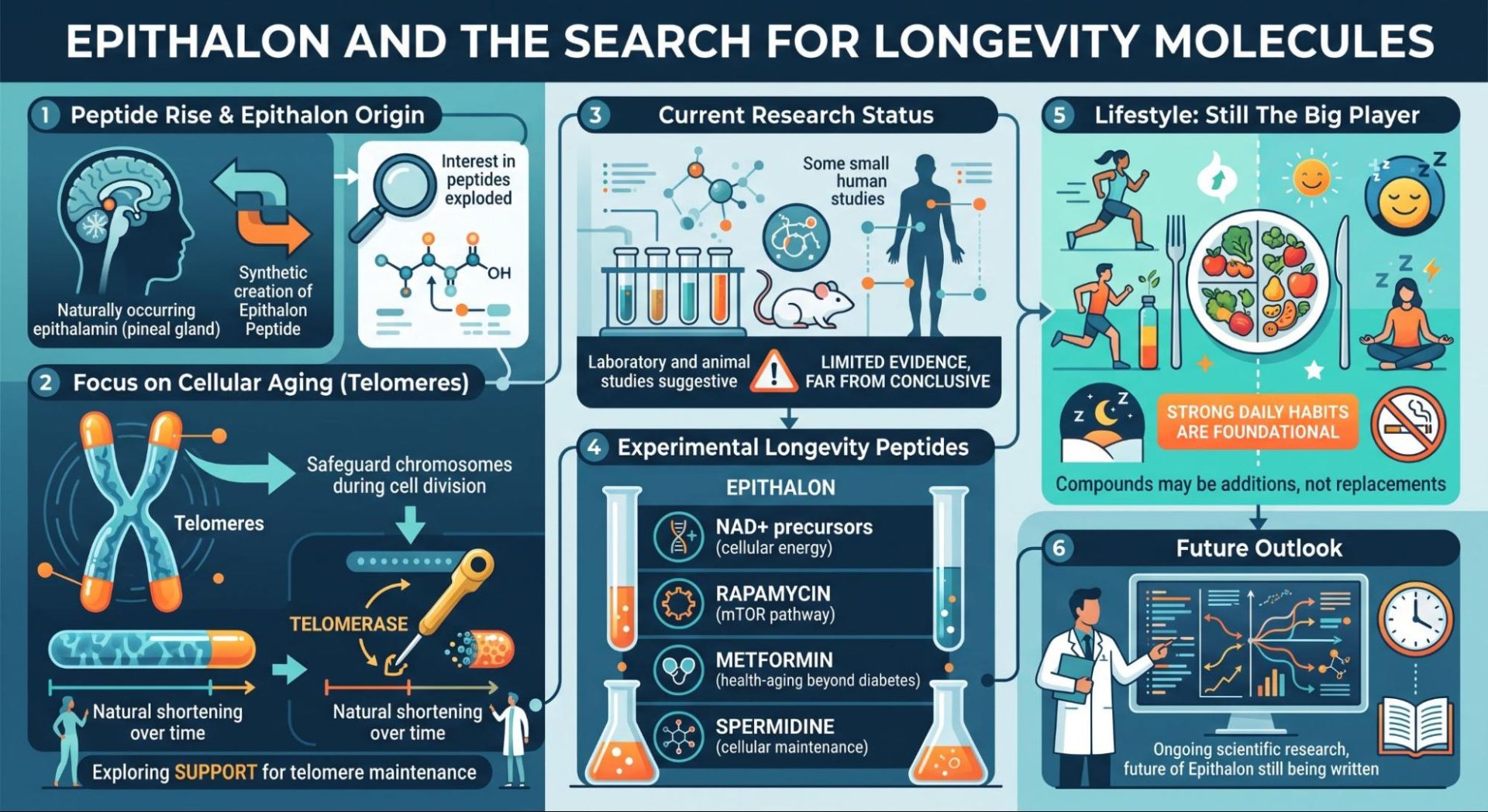
Epithalon seems to pop up everywhere longevity enthusiasts gather. While it has certainly generated plenty of excitement, it's also surrounded by important questions that researchers are still working to answer.
Like many compounds being explored in longevity science, Epithalon sits at the intersection of curiosity and caution. Scientists continue to investigate how it may interact with cellular processes linked to aging, but that doesn't mean all the claims circulating online have been proven. Understanding what the research actually says is the best place to start.
Why Longevity Enthusiasts Are Turning to Peptides
Interest in peptides has exploded over the past several years. These short chains of amino acids naturally occur throughout the body and play roles in everything from healing to hormone signaling.
As more people follow peptide research, staying organized becomes increasingly important. Many enthusiasts rely on a peptide tracker app to keep detailed records of research schedules, observations, inventory, and notes.
Among the many peptides attracting attention, Epithalon has earned a particularly strong reputation due to its association with aging research. Rather than focusing on muscle growth or recovery, it has become known for its potential relationship with cellular aging and longevity.
What Is Epithalon?
Epithalon is a synthetic peptide developed from a naturally occurring peptide known as epithalamin, which originates from the pineal gland. Scientists created Epithalon to better study how certain biological processes associated with aging might be influenced at the cellular level.
One reason Epithalon has attracted so much interest is its possible relationship with telomerase, an enzyme involved in maintaining telomeres. Telomeres are protective structures found at the ends of chromosomes that naturally shorten as cells divide over time.
Researchers have explored whether supporting these structures could influence aspects of cellular aging. However, much remains under investigation.
Because of these potential mechanisms, Epithalon is often grouped among experimental longevity peptides. However, researchers continue to emphasize that many questions remain unanswered, particularly regarding long-term effects and broader clinical applications.
Why Researchers Are Interested in Telomeres
To understand why Epithalon receives so much attention, it helps to understand telomeres. Telomeres perform a protective function by helping safeguard chromosomes during cell division.
Each time many cells divide, telomeres gradually become shorter. Eventually, they can become too short to support normal cell replication, contributing to processes associated with aging. This natural shortening has made telomeres one of the most studied topics in longevity research.
Scientists are investigating whether compounds like Epithalon could influence telomerase activity and help maintain telomere length under certain conditions. While laboratory findings have generated interest, translating those results into meaningful human outcomes remains an active area of research.
What Does the Current Research Actually Say?
The research surrounding Epithalon is intriguing, but it's also relatively limited. Much of the excitement stems from laboratory experiments and animal studies suggesting the peptide may influence biological pathways associated with aging. Some small human studies have also been published, but the available evidence is far from conclusive.
Researchers continue investigating whether Epithalon may affect telomerase activity, oxidative stress, and other cellular processes linked to healthy aging. For now, scientists generally view Epithalon as a promising area of research rather than a validated longevity solution.
How Epithalon Compares to Other Longevity Molecules
Epithalon isn't the only compound making headlines in longevity science. Researchers are also studying NAD+ precursors, rapamycin, metformin, spermidine, and several other experimental peptides, each targeting different biological pathways that may influence aging.
NAD+ precursors are being explored for their role in cellular energy production, while rapamycin has attracted attention for its effects on the mTOR pathway. Metformin continues to be investigated for potential health-aging benefits beyond its established use for diabetes, and spermidine has been studied for its possible role in cellular maintenance processes.
Rather than competing directly, these molecules represent different scientific approaches. Aging is incredibly complex, and many experts believe no single compound is likely to serve as a universal answer.
Why Lifestyle Still Plays the Biggest Role in Healthy Aging
Even as researchers search for new longevity molecules, the strongest evidence continues to support healthy daily habits. Regular exercise, nutritious eating patterns, quality sleep, stress management, and avoiding tobacco remain some of the most reliable ways to promote long-term health.
Experimental compounds like Epithalon are being studied as possible additions to, not replacements for, these foundational habits. A healthy lifestyle creates the environment in which the body's natural systems can function at their best.
The Future of Epithalon Research Is Still Being Written
Epithalon has earned its place among the most talked-about peptides in longevity research thanks to its fascinating connection to telomeres and cellular aging. Although science has identified promising avenues for further investigation, many important questions remain unanswered.
As researchers continue studying how peptides influence healthy aging, Epithalon will likely remain an important topic of discussion. The coming years should provide clearer answers about where it fits within the broader search for longevity molecules. Until then, it's best viewed as an intriguing area of ongoing scientific research.