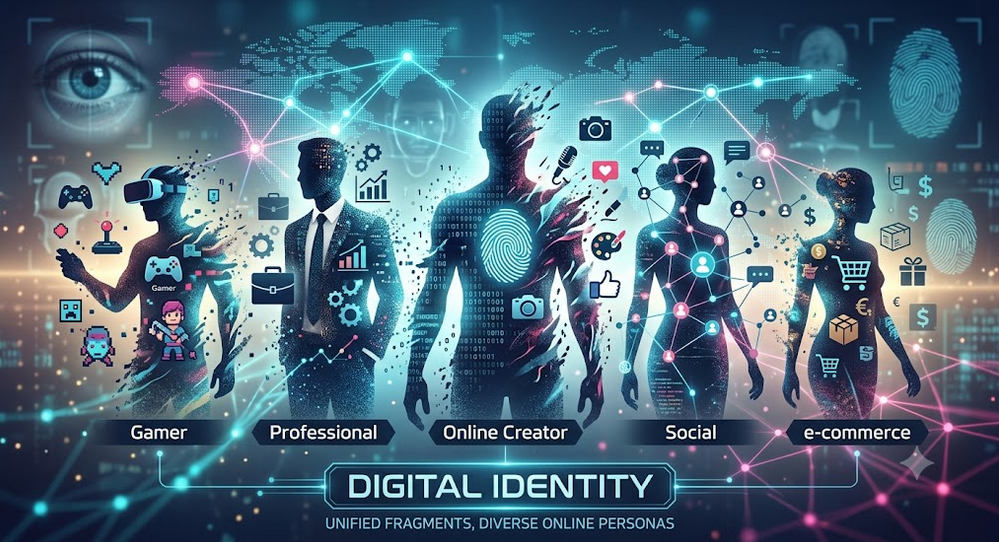
The internet has evolved far beyond its original architecture. Modern online platforms no longer identify users solely through login credentials or IP addresses. Instead, they evaluate hundreds of technical signals—from browser fingerprints and device characteristics to behavioral patterns and network reputation—to determine whether a visitor appears genuine, trustworthy, or potentially risky.
As this technology becomes increasingly sophisticated, managing digital identity is no longer a niche technical challenge. It has become a strategic requirement for professionals who operate multiple legitimate online accounts, conduct international business, perform cybersecurity research, or test web applications across different environments.
This shift explains why anti-detect browsers have attracted growing attention in recent years. Rather than simply masking information, these browsers enable users to build isolated browser environments with independent digital identities. Each browser profile can maintain its own cookies, local storage, browser fingerprint, extensions, language settings, time zone, hardware parameters, and network configuration.
The result is not anonymity in the traditional sense but controlled identity management. Every profile behaves as a separate browser environment, allowing organizations and individuals to separate workflows without unnecessary cross-contamination between accounts.
From Privacy to Identity Management
For many years, online privacy discussions focused primarily on hiding information. VPNs, proxy servers, cookie blockers, and privacy-oriented browsers aimed to reduce the amount of identifiable data exposed during browsing.
Today's web presents a different challenge.
Many online services rely on fingerprinting technologies that analyze dozens or even hundreds of browser characteristics. Screen resolution, installed fonts, WebGL rendering, Canvas output, AudioContext signatures, CPU architecture, GPU details, timezone consistency, language preferences, and numerous other signals can be combined into a unique browser fingerprint.
This means that protecting privacy increasingly involves managing consistency rather than simply hiding information. An unusual combination of settings may attract more attention than a realistic, internally consistent browser profile.
Antidetect browsers address this challenge by allowing users to configure coherent browser environments that better reflect how real devices appear online.
A Growing Number of Legitimate Use Cases
Although antidetect browsers are often associated with affiliate marketing, their practical applications extend far beyond advertising.
Marketing agencies frequently manage advertising accounts belonging to multiple clients. Keeping each client inside an isolated browser profile reduces operational risks and prevents accidental mixing of sessions.
Quality assurance teams use isolated profiles to reproduce customer issues under different browser configurations, operating systems, or regional settings without maintaining numerous physical devices.
Cybersecurity professionals employ these environments when investigating phishing campaigns, malicious websites, or suspicious web applications. Isolation helps contain potential threats while preserving a controlled testing environment.
E-commerce companies operating internationally often need to verify localized storefronts, payment systems, currencies, promotions, and customer experiences across different regions. Independent browser identities simplify these workflows.
Researchers studying browser security, tracking technologies, and anti-fraud systems also benefit from reproducible browser configurations that can be created, saved, and shared across teams.
In each of these examples, the primary objective is operational efficiency, repeatability, and environment isolation rather than anonymity.
The Rise of AI-Driven Fraud Detection
One of the most significant developments shaping the future of digital identity is the growing use of artificial intelligence by online platforms.
Modern fraud detection systems rarely rely on a single signal. Instead, machine learning models evaluate complex combinations of technical attributes, historical activity, behavioral patterns, account relationships, network reputation, login frequency, geographic consistency, and browser characteristics.
This creates an ongoing technological evolution between detection systems and browser identity management tools.
Professional antidetect browsers increasingly focus on maintaining internally consistent browser profiles instead of randomly modifying parameters. Realistic environments tend to produce more predictable behavior than artificially generated fingerprints containing conflicting hardware or software characteristics.
As AI-powered security systems continue to mature, consistency and realism will likely become more important than simply maximizing the number of spoofed attributes.
Digital Identity as a Business Asset
Organizations increasingly recognize that digital identity deserves the same level of management as physical devices or user accounts.
A browser profile may represent years of accumulated cookies, authentication sessions, trusted device history, saved preferences, and platform reputation. Losing or corrupting that environment can interrupt business operations just as seriously as losing access to an important server.
For distributed teams, cloud synchronization of browser profiles enables employees to continue working from different locations while maintaining consistent browser environments.
Some enterprise platforms already integrate browser profile management with access control systems, encrypted storage, proxy management, and collaborative workflows. This reflects a broader shift from treating browsers as disposable applications toward viewing them as managed digital workspaces.
Responsible and Ethical Use
Like many powerful technologies, antidetect browsers are neutral tools. Their impact depends entirely on how they are used.
Organizations should ensure that browser identity management complies with applicable laws, platform terms of service, internal security policies, and ethical standards. Transparency, proper authorization, and legitimate business purposes remain essential considerations regardless of the technology involved.
Responsible use includes protecting customer data, maintaining secure authentication practices, avoiding deceptive activities, and respecting the policies of online platforms.
Understanding both the technical capabilities and the legal responsibilities associated with antidetect browsers helps organizations make informed decisions while reducing operational risks.
Why Independent Analysis Matters
Because the antidetect browser ecosystem evolves rapidly, selecting the right solution requires more than comparing feature lists.
Independent analytical resources provide valuable context by evaluating fingerprint quality, browser isolation mechanisms, profile management capabilities, automation support, team collaboration features, security architecture, and compatibility with modern detection systems.
They also help distinguish marketing claims from independently verifiable technical characteristics, allowing businesses to choose tools that best match their operational requirements.
Analytical platforms such as antidetect.org contribute to this process by publishing educational materials, technology overviews, feature comparisons, and practical guidance that help users better understand the rapidly changing landscape of browser identity management.
Looking Ahead
Digital identity is steadily becoming one of the fundamental layers of the modern internet. As online services rely more heavily on device intelligence, behavioral analysis, and AI-assisted risk assessment, browser identity management will likely become increasingly important across numerous industries.
Antidetect browsers represent one part of this broader evolution. Rather than simply helping users hide information, they provide structured ways to manage multiple isolated digital environments, improve operational efficiency, and support legitimate professional workflows.
The technology will almost certainly continue to evolve alongside advances in browser security, privacy standards, fraud prevention, and artificial intelligence. New detection methods will emerge, and browser management platforms will adapt in response.
For businesses, developers, marketers, researchers, and cybersecurity professionals, understanding these technologies today provides a stronger foundation for navigating tomorrow's digital landscape.
The future of the web is unlikely to be defined by a single online identity tied to a single device. Instead, it will increasingly revolve around configurable, context-aware digital environments designed for specific tasks, teams, and business processes. Those who understand how digital identity works—and how to manage it responsibly—will be better prepared for the next generation of internet technologies.