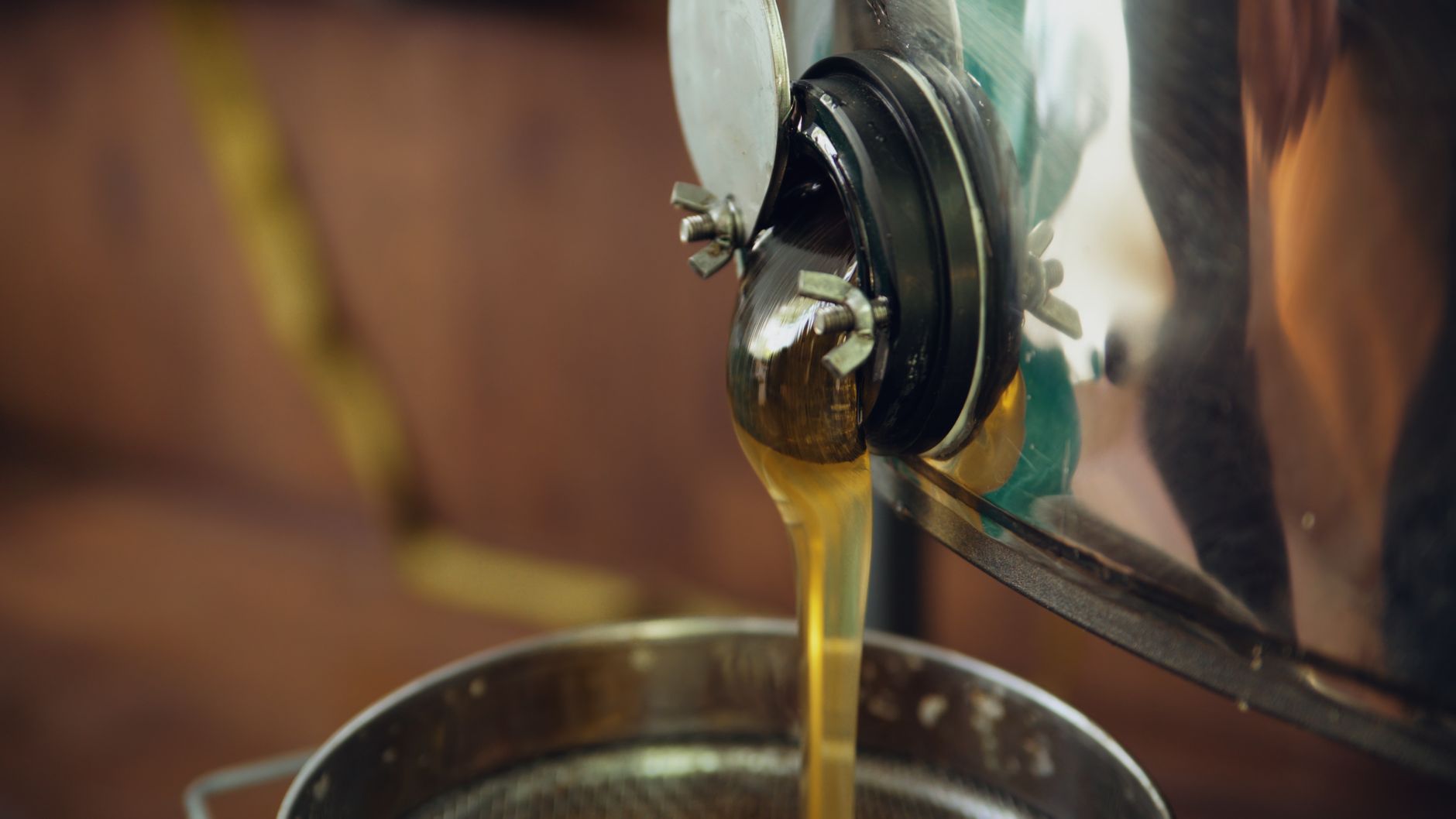
Two propolis extracts of 10:1 can be completely different. One may be an ethanol extract of poplar material with high amounts of flavonoids. The other may be a Brazilian green propolis extract with high amounts of prenylated phenylpropanoids. A water based propolis extract can be of completely different chemical and sensory character. When buying extracts only comparing the ratio of the extracts or the “total amount of flavonoids” the formula team will face a lot of uncertainty.
Propolis is a mixture of plant resin, beeswax and other materials found in the hive that bees have mixed together. The composition of propolis can vary greatly depending on local flora, geographic location, time of year, bee species and processing methods. A workable specification would therefore identify the type of propolis of interest and establish measures to assess consistency.
Start with a Chemotype, Not a Generic Ingredient Name
Trace the collection region and likely plant source
For suppliers of Propolis it is recommended to state country and collection region as well as the species of bees that were used for harvesting the Propolis. Additionally harvest time or even seasonal control as well as the raw material cleaning of the Propolis have to be declared. Furthermore suppliers have to state the botanical source or the chemotype of the Propolis. The assignment of the botanical source or chemotype to a certain Propolis sample needs analytical support. Thus it was proven for Brazilian red Propolis that it is of Dalbergia ecastophyllum origin by chromatographic and spectroscopic methods. Another example are samples of Indonesian stingless bee Propolis which are rich in triterpenes and origin from mango resin. Such Propolis samples have to be distinguished from poplar type Propolis and therefore should not be judged by a marker panel for such material.
The ability to trace material should extend to the raw batches that have been combined for extraction. Find out whether the manufacturer combines material from different regions or even seasons, how the targets for blending are set and whether a retained raw material sample and the final extract sample are retained. Country names alone are not specific enough for lot approval.
Define what the extract ratio actually measures
Record the following for a dry extract: raw propolis input, native extract yield, carrier, drying aid, final powder mass. For a liquid extract record the propolis equivalent, extraction solvent, residual solvent and the final solvent system. A 5:1 liquid concentrate with residual ethanol is different from 100 mg solvent free native solids although both may be described as equivalent to 500 mg of propolis.
The calculation belongs in the specification. It should show whether the declared equivalent is based on crude propolis before dewaxing, cleaned propolis, or another intermediate. Wax removal and filtration can substantially change yield without showing whether the desired marker family was retained.
Avoid Three Common Qualification Failures
Failure 1 uses one total value as identity proof
“Total phenolics” and “total flavonoids” are method dependent sums of groups of compounds. Such parameters can be very useful for process control and for trending of a process, provided that the same procedure is used and that the procedure has been validated. However, the two parameters do not provide information on the identity of compounds that are present in propolis. Different types of propolis contain different mixtures of compounds, i.e. of flavonoids, phenolic acids and esters, of prenylated compounds and of triterpenes.
First a marker profile has to be built up around the declared type of plant material. This may include, for example, with poplar type material, the flavonoids pinocembrin, chrysin and galangin as well as caffeic acid derivatives. Artepillin C and related compounds are found in large amounts in Brazilian green propolis. In contrast, Brazilian red propolis requires the presence of isoflavonoid markers. For identification by means of HPTLC or HPLC fingerprinting, subsequent quantification of individual markers by means of a suitable HPLC or LC method is required. The approved chromatographic pattern is as important as the total headline figure.
Failure 2 ignores the extraction solvent
Water, ethanol, ethanol water mixtures, and polyethylene glycol systems extract different portions of propolis. Comparative studies have reported changes in phenolic profiles and laboratory antioxidant activity as solvent composition changes. That does not make one solvent universally superior. It means the solvent must suit the target chemotype, product format, residual limits, flavor, and label.
Ask for the solvent strength, extraction temperature and time, dewaxing steps, concentration and drying conditions of the carrier. For alcohol free oral products ask how the supplier removed the ethanol or replaced it with something else and if this changed the fingerprint. For topical products ask for the compatibility with the emulsion, surfactants, preservative, fragrance and packaging.
Failure 3 converts screening activity into a consumer promise
Many propolis extracts exhibit antimicrobial or even antioxidant activity in test tube experiments. Some mouthwashes containing propolis extracts have also been tested in small clinical trials. Due to huge differences in the used extract, the concentration, the comparator, the studied population and the primary endpoint, results from such studies are highly variable and even a very positive test result does not automatically allow a meaningful product claim as was shown for a randomized gingivitis trial.
Treat bioassays as characterization or development tools. Record the extract, the marker profile of that extract, the use level, the formulation, the bioassay study design and the target market for that finished claim. Avoid general terms and conditions such as “fighting the infection” or “healing the tissue”. Such general terms and conditions need to be covered by the appropriate product category and corresponding evidence.
Let the Product Format Set the Acceptance Rules
|
Product format |
Main formulation questions |
Supplier data to request |
|
Oral liquid or spray |
Solvent – how clear it looks, any sediment, the taste, the alcohol declaration, and whether it fits the pump. |
Propolis equivalent, Solvent system, Residual ethanol, Marker fingerprint, Microbial results. |
|
Lozenge or gummy |
Bitterness, resinous odor, heat exposure, uniform distribution, sticking |
Dry solids, carrier, particle size, thermal and sensory data, assay after processing. |
|
Capsule or tablet |
Bulk density, flow, wax content, blend uniformity, disintegration |
Pourcentage d’extrait natif, support, humidité, taille des particules, profils des lots récents |
|
Cream, balm, or serum |
Color, odor, solubility, emulsion stability, skin tolerance, packaging interaction. |
Solvent and excipients, marker profile, preservative compatibility, safety and allergen file. |
Pilot the complete formula. The propolis extract in ethanol solution type may precipitate out of solution when diluted with water. While a dark grade may be acceptable for a lozenge, it would not be suitable for a clear spray. Dry powders may form cakes and coat equipment surfaces due to residual resin and wax. Record mass balance and marker recovery after mixing or after heating for evidence of any process losses.
Put Safety and Contaminants Ahead of the Marketing Story
While propolis can cause an allergic reaction, listed medicines in Australia are required to have a skin irritation warning for topical products and an allergy warning for non-topical products. This allergy warning must inform consumers to cease use of the product if they experience symptoms of mouth or throat irritation or swelling including lips. The requirements also identify lead as an ingredient required to be listed for propolis in medicines, with a maximum concentration for the ingredient of 0.001% for the propolis ingredients. Requirements and warnings for other markets will vary, and will need to be controlled by the destination market in terms of specification and label approval.
Supplier qualification should address elemental contaminants, pesticide residues, polycyclic aromatic hydrocarbons when justified by collection or processing risk, microbiological quality, specified pathogens, residual solvents, and foreign matter. Ask how apiaries prevent contamination from hive coatings, smoke, transport containers, and environmental exposure. For topical formulas, review sensitization and irritation evidence for the actual extract and concentration; a generic “natural” statement is not a safety assessment.
Compare Suppliers with a Chemotype Specific RFQ
In the later sourcing stage, PharmaSources can help buyers locate potential natural extract suppliers after the chemotype and dosage form have been defined. Send every candidate the same RFQ fields: origin, bee species, collection controls, propolis type, raw material definition, solvent, extract ratio calculation, native solids, carrier, marker panel, fingerprint method, contaminants, product format, target market, quantity, packaging, shelf life, sample size, and change notification.
Obtain the certificates and chromatograms from 3 recent commercial supplies. Compare the ratios of the selected markers as well as the absolute values. Compare the color, odor, wax or insoluble matter, moisture, density and sensory performance with the chemistry values. If a marker is within the limits but the fingerprint changes sharply, investigate the possible raw material blending, season, solvent or analysis method.
The quality agreement should name changes that require notice, including region, apiary network, bee species, harvest window, solvent, extraction equipment, carrier, test method, and laboratory. A low price has little value if every season forces a new flavor system or produces a different label risk.
Conclusion
Propolis extract cannot be reduced to one ratio or one total flavonoid result. Origin shapes chemistry; solvent reshapes what reaches the extract; formulation determines which differences matter. Buyers who define a chemotype, retain a fingerprint, test the real dosage form, and set market specific safety controls can compare suppliers on repeatability and finished product fit. That makes both the technical review and the commercial quote more meaningful.
Procurement FAQs
Q1. What is the best universal marker for propolis extract?
There is no single universal marker, selected markers from a declared chemotype have to be supported by a chromatographic fingerprint. A marker for poplar type propolis might not be the appropriate one for Brazilian green, Brazilian red or triterpene rich propolis.
Q2. Would it be appropriate to use total phenolics as the release assay?
Process control using this assay would only be secondary if an appropriate method for the grade has been developed and validated. The assay alone is a weak identity or potency assay because many different compounds can give the same total response. Use in conjunction with type specific chromatography and selected marker assays.
Q3. Which sample should procurement request?
Request a sample from the intended commercial extraction route and final carrier system, with its own lot certificate and chromatogram. Also ask for recent commercial lot data so the team can judge seasonal and batch variation before approving a supply agreement.