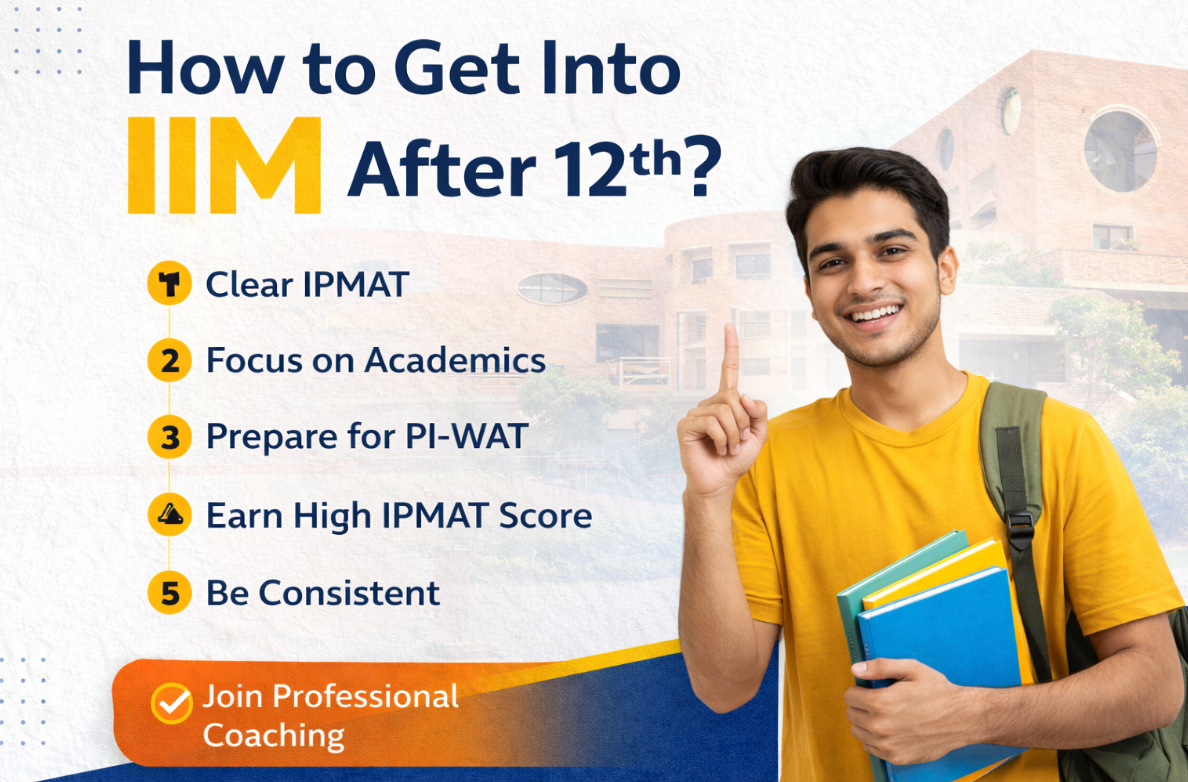
Getting into an Indian Institute of Management (IIM) right after Class 12 is a dream for many students who aspire to build a strong career in business, management, and leadership. Traditionally, IIMs were accessible only after graduation through exams like CAT. However, with the introduction of the Integrated Programme in Management (IPM), students now have a direct pathway to enter these prestigious institutes immediately after school.
To navigate this competitive journey effectively, many aspirants are increasingly relying on online IPMAT coaching to build conceptual clarity, develop aptitude skills, and prepare strategically for entrance exams.
What is the IPM Program in IIMs?
The Integrated Programme in Management (IPM) is a five-year dual-degree program that combines undergraduate and postgraduate management education (BBA + MBA). It is designed for students who are clear about pursuing management early in their academic journey.
Currently, several IIMs offer IPM or similar programs, including:
- IIM Indore (first to introduce IPM)
- IIM Rohtak
- IIM Ranchi
- IIM Jammu
- IIM Bodh Gaya
While the structure may vary slightly across institutes, the core objective remains the same: to provide a strong foundation in management, economics, mathematics, and social sciences, followed by advanced MBA-level training.
Why Choose IIM After 12th?
Choosing an IIM right after Class 12 offers several advantages:
- Early career clarity: Students start focusing on management from the beginning
- Strong academic foundation: The program integrates diverse subjects like
economics, statistics, and communication - Prestigious brand value: IIMs are among the top institutes in India
- Holistic development: Focus on leadership, critical thinking, and communication skills
Additionally, students avoid the uncertainty of preparing for the CAT later, as they are already enrolled in a structured management program.
Step-by-Step Process to Get Into IIM After 12th
1. Appear for Entrance Exams
The first and most crucial step is to clear the entrance exams, such as:
- IPMAT (IIM Indore & IIM Rohtak)
- JIPMAT (for IIM Jammu & IIM Bodh Gaya)
These exams are specifically designed to assess aptitude in areas required for management studies.
2. Understand the Exam Structure
A clear understanding of the IPMAT Syllabus is essential for effective preparation. The exam typically tests candidates on:
Quantitative Ability
- Arithmetic (Percentages, Profit & Loss, Time & Work)
- Algebra and Number Systems
- Basic Geometry and Data Interpretation
Verbal Ability
- Reading Comprehension
- Vocabulary and Grammar
- Sentence correction and para-jumbles
The difficulty level is higher than that of standard school exams, requiring a strong conceptual understanding and regular practice.
3. Clear the Cut-Offs
Each IIM sets sectional and overall cut-offs for shortlisting candidates. Students must:
- Perform well in both Quantitative and Verbal sections
- Maintain a balanced score across sections
- Avoid neglecting any single area
Clearing the cut-off is essential to move to the next stage of the selection process.
4. Personal Interview (PI) Round
After clearing the written exam, shortlisted candidates are invited for a Personal Interview (PI). This stage evaluates:
- Communication skills
- Confidence and personality
- General awareness and current affairs
- Academic understanding
Interviewers may ask questions about school subjects, hobbies, current events, and career goals. This round is crucial as it assesses the candidate beyond academic performance.
5. Final Selection Criteria
The final selection is based on a composite score that includes:
- Entrance exam performance
- Personal Interview score
- Academic performance (Class 10 and 12 marks)
Each IIM has its own weightage system, but consistent performance across all stages is key to securing admission.
Eligibility Criteria for IPM Programs
While specific criteria may vary slightly across institutes, the general requirements include:
- Completion of Class 12 or equivalent from a recognised board
- Minimum percentage criteria (varies by institute and category)
- Age limit (usually around 20 years for the general category, with relaxation for reserved categories)
Candidates are advised to check individual IIM websites for exact eligibility details.
Key Skills Required to Crack IPMAT
Cracking IPMAT requires more than just academic knowledge. Aspirants must develop a strong set of skills:
- Quantitative Aptitude
A strong foundation in mathematics is essential. Students should focus on:
- Concept clarity
- Speed and accuracy
- Regular practice of problem-solving
- Verbal Ability and Reading Skills
The verbal section tests comprehension and language skills. Aspirants should:
- Read newspapers and editorials daily
- Improve vocabulary
- Practice comprehension passages
- Time Management
With sectional time limits, managing time efficiently is crucial. Students must:
- Practice timed mock tests
- Learn to prioritise questions
- Avoid spending too much time on difficult problems
- Analytical Thinking
Analytical skills help in solving complex questions quickly. This includes:
- Logical reasoning
- Pattern recognition
- Strategic problem-solving
- Decision-Making Skills
Choosing the right questions is as important as solving them. Students should:
- Attempt high-confidence questions first
- Avoid unnecessary guessing
- Maximise accuracy
Importance of Mock Tests and Practice
Mock tests play a vital role in IPMAT preparation. They help students:
- Understand exam pattern and difficulty level
- Improve speed and accuracy
- Identify strengths and weaknesses
However, the key lies in analysing mock tests, not just attempting them. Reviewing mistakes and improving weak areas leads to consistent progress.
Common Mistakes to Avoid
Many aspirants fail to perform well due to avoidable mistakes, such as:
- Ignoring one section (especially Quantitative Ability)
- Lack of consistency in preparation
- Over-reliance on rote learning
- Not analysing mock test performance
- Poor time management during the exam
Avoiding these mistakes can significantly improve overall performance.
Why Structured Preparation Matters
IPMAT is a competitive exam with limited seats across IIMs. A structured preparation approach helps students:
- Cover the syllabus systematically
- Practice regularly with proper guidance
- Stay disciplined and focused
Guided preparation ensures that aspirants do not miss important topics and maintain consistency throughout their journey.
Career Opportunities After IPM
Graduating from an IIM through the IPM program opens doors to various career opportunities, including:
- Consulting
- Finance and Banking
- Marketing and Sales
- Entrepreneurship
- Corporate leadership roles
The IIM brand, combined with strong academic training, provides a significant advantage in the job market.
Conclusion
Getting into IIMs after Class 12 is a highly rewarding yet competitive journey. It requires a combination of conceptual clarity, skill development, strategic preparation, and consistent effort. From clearing entrance exams to performing well in interviews, each stage plays a crucial role in the final selection.
With early preparation, the right guidance, and a disciplined approach, aspirants can successfully secure admission into top IIMs and build a strong foundation for a successful career in management.