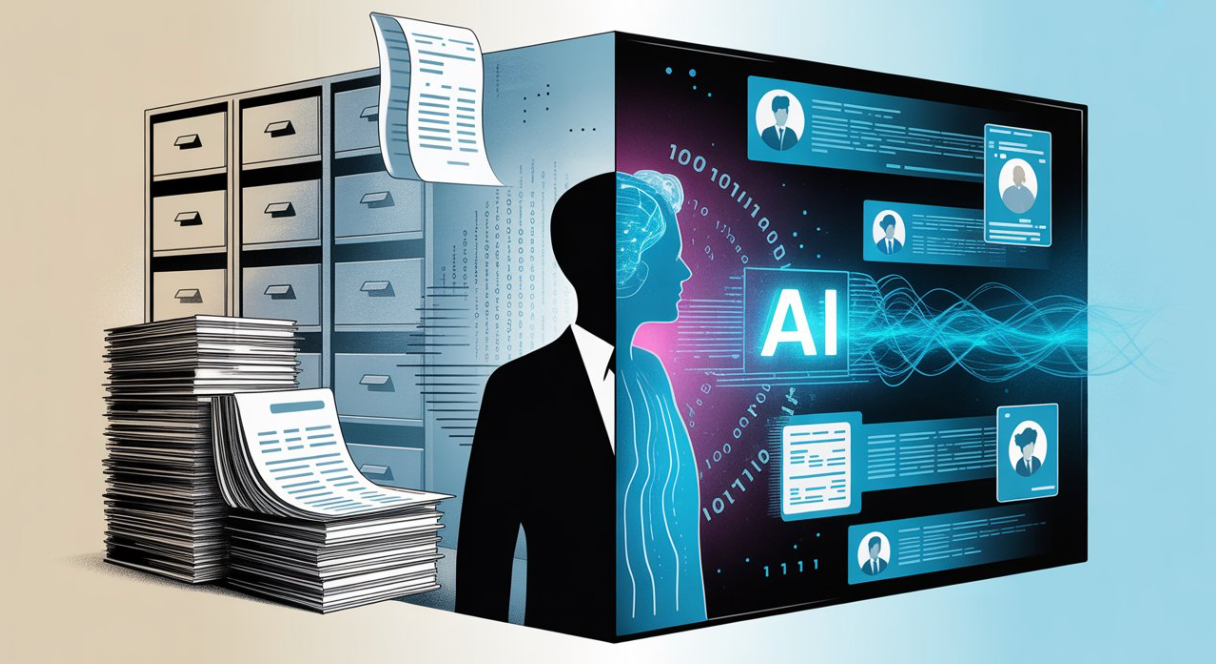
The job application process has changed dramatically over the last decade. No longer do people print out stacks of resumes and mail them to employers. These days technology, and in particular artificial intelligence (AI), are at the heart of how firms find talent and how the people who want jobs apply for jobs. Knowing what this new world looks like is a must for anyone who wants to hire or get hired.
This article looks at how AI tools have had a big effect on today’s job applications. We will look at how AI recruitment software is changing hiring from the employer’s point of view and give advice that’s useful to those looking for work. You will learn how to work through this new world and even use tech to your advantage..
The Rise of AI Recruitment Software
Firms today often get hundreds if not thousands of applications for one open role. Going through all the candidates by hand wastes time and can be biased. This is where AI recruitment software comes in. These strong platforms automate and speed up the first parts of the hiring process.
How Does It Work?
AI recruitment software uses machine learning algorithms to look at resumes, cover letters and online application forms. The AI looks for specific words, skills, experiences and qualifications that fit the job description. It can quickly rank candidates based on how well they fit, giving recruiters a pre-screened list of the best candidates.
If, for example, a firm is hiring a “Digital Marketing Manager,” the AI will look for things like “SEO,” “PPC,” “content strategy” and “social media management.” It can also look at years of experience and education. This lets hiring managers spend their time interviewing the qualified, rather than screening the unqualified..
Benefits and Challenges for Employers
For businesses the benefits are pretty clear. AI recruitment software saves time, cuts costs and can mean a better pool of qualified candidates. By automating repetitive tasks, recruiters can spend more time on the people part of hiring, such as building relationships and seeing if a person will fit in culturally.
But there are problems. If employers overly trust in AI there can be a problem with diversity if the algorithms aren’t set up right. If an algorithm learns from old data of a non-diverse workforce then it might just repeat that data. Also, the systems might miss out on some very talented “unusual” candidates who don’t fit the norm but have special, valuable skills..
Navigating the AI as a Job Seeker
As a job applicant, your first hurdle is often a machine, not a person. To get your resume seen by human eyes, you need to optimize it for AI recruitment software.
Tailoring Your Resume for the AI
Once you are a job seeker, your first challenge is often a machine, not a person. To get your resume in front of people, you need to optimize it for AI recruitment software.
- Mirror the Keywords: Carefully read the job posting and identify the key skills and qualifications listed. Incorporate these exact phrases and keywords throughout your resume, particularly in your skills and experience sections.
- Use Standard Formatting: Avoid overly complex designs with columns, tables, or images that can confuse parsing software. Stick to a clean, single-column layout with standard fonts like Arial, Calibri, or Times New Roman.
- Be Specific with Titles: Use standard job titles. If your previous role was “Growth Ninja,” consider changing it to “Marketing Specialist” if that more accurately reflects the job you’re applying for and aligns with industry norms.
Standing Out in the Human Round
Once your application makes it past the AI, you need to impress a real person. This is where the presentation and clarity of your materials become crucial. While your resume must be machine-readable, it also needs to be visually appealing and easy for a human to digest. A recruiter might only spend a few seconds on their first glance.
This is where you can make your resume look better when you present it neatly using tools like Canva. Platforms like Canva offer a wide range of professionally designed resume templates. These templates balance modern aesthetics with the readability that recruiters appreciate.
Creating a Visually Appealing Resume
Using a design tool can help you present your qualifications in a compelling way. You can choose a layout that guides the reader’s eye to the most important information, such as your recent accomplishments or core skills. A well-designed resume communicates professionalism and attention to detail before the recruiter even reads a single word.
Remember to save the final version as a PDF to preserve your formatting. However, always check the application instructions; some older systems may still require a .doc or .docx file. In such cases, maintain a simple, text-based version of your resume for compatibility.
The Future of AI in Hiring
AI in recruitment will only grow day by days. We will see more advanced tools that analyze video interviews for tone and feeling, predictive analytics that look for good fits, and AI chatbot helpers that walk applicants through the process. With the rise of AI chatbot development, we may also see stronger use of AI video generation for creating training videos, employer branding content, and even automated video assessments.
With respect to job seekers and employers, the future involves both human and artificial intelligence working together. Employers have to make sure that their AI Recruitment software is used ethically and as a way of helping and not replacing human judgement. Those who are trying to get jobs must learn to work through this technology-based process by being smart and flexible.
If you understand how these systems work and know how to show your skills in the best way, you can get through today’s job application world and find your next great opportunity.