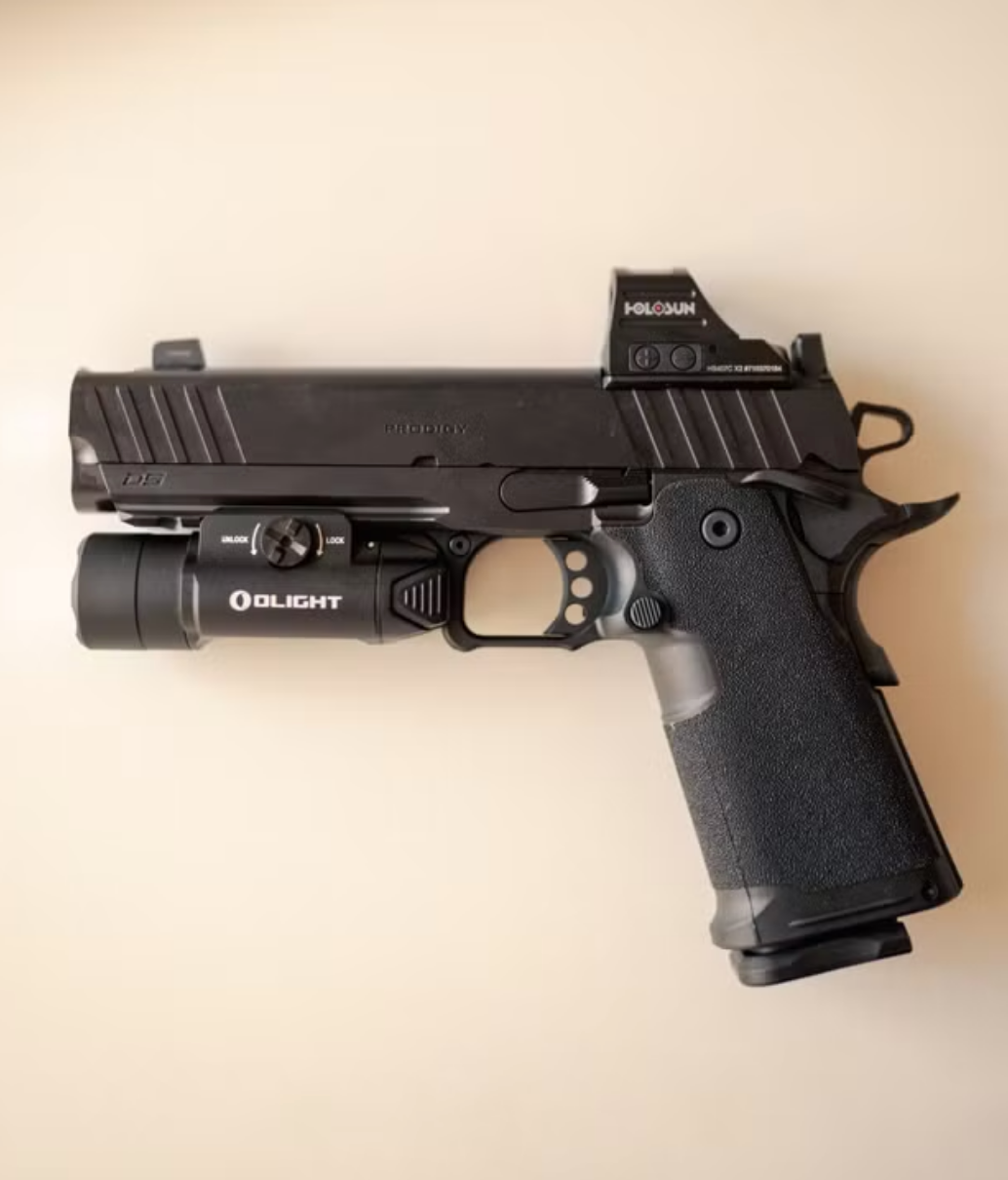
Red dots on pistols are not rare anymore. You see them at indoor ranges, training classes, matches, and on handguns built around a reliability-first mindset. But before choosing the optic, most buyers run into a more basic question: what slide should it go on?
The choice usually comes down to Glock MOS slides or a standard Glock slide. MOS is the easier route for many people. A standard slide can make sense when the shooter already knows the exact optic and wants a more dedicated direct-mount setup.
Neither option is the “smart” choice every time. It depends on fit, cost, optic footprint, holster use, and how much flexibility you want later.
What Is a Glock MOS Slide?
MOS stands for Modular Optic System. A Glock MOS slide comes factory-cut for optic mounting plates. The plate sits between the slide and the red dot, helping match the optic to the slide. The optic footprint is just the mounting pattern under the optic.
That is the main appeal. The slide starts optic-ready, so you are not beginning with custom cutting. Still, it is not universal. Glock model, generation, MOS plate, screws, and optic footprint all need to match.
For examples of Glock MOS slides and optic-ready options, you can go to website and compare available choices before buying.
What Is a Standard Glock Slide?
A standard Glock slide is the traditional non-optic slide. It is usually meant for iron sights unless the owner buys an aftermarket optic-ready slide or has the original slide professionally milled.
Milling means a qualified professional cuts the slide for one specific optic footprint. That can make a clean setup, but it also narrows your options. If you change optics later, the new footprint may not match the old cut.
Some shooters like standard slides because they are simple. Others like them because they can become a very specific Glock slide for red dot use when the optic choice is already settled.
Glock MOS Slides: Key Advantages for Optic-Ready Setups
MOS works best for buyers who want a practical first step into pistol optics.
- Factory optic-ready convenience: The slide is already designed for optic mounting, so you do not have to plan custom slide work before trying a red dot.
- Broader optic flexibility through adapter plates: Different compatible plates may support different footprints, depending on the Glock model, MOS plate, and optic.
- Better resale and factory appeal: Some buyers prefer a factory optic-ready setup over a heavily modified slide, especially if they may upgrade or sell later.
Short rule: if you are still learning what optic you like, MOS gives you more breathing room.
Glock MOS Slides: Possible Drawbacks
The plate system is useful, but it is also the part that creates tradeoffs.
- Plate system adds extra height and complexity: A plate can place the optic a little higher than some direct-mount cuts. That may affect sight picture, co-witness preference, or holster fit.
- Plate and screw compatibility matters: Plate, screw length, slide model, and optic footprint need to line up. Small mismatch, big annoyance.
- Not always the most customized option: MOS is flexible, but it may not be the lowest or cleanest setup for one specific optic.
Co-witness means the iron sights remain visible through or near the optic window. Some shooters want that. Others do not care much.
Standard Slides: Key Advantages for Optic-Ready Builds
A standard slide is slower to turn into an optic setup, but it gives more control when the buyer already has a plan.
- Direct-mount customization potential: A standard slide can be professionally milled for a specific footprint, which may allow a lower optic position.
- Cleaner single-optic setup: If the shooter knows the exact red dot they want, a dedicated cut can feel cleaner than using a plate.
- More aftermarket design options: Buyers can compare finish, serrations, window cuts, sight options, and model compatibility. Looks matter less than fit, but choices are wide.
This path makes more sense when you are done testing and ready to commit.
Standard Slides: Possible Drawbacks
A standard slide is not ready for a red dot by default. That means more planning.
- Requires extra planning or professional work: Milling or buying a replacement slide adds time, cost, and compatibility decisions.
- Less flexibility after milling: Once a slide is cut for one footprint, switching optics can be harder.
- Warranty, fit, and quality concerns: Poor aftermarket parts or poor work can create safety, fit, or reliability problems.
For range use, training, high round counts, or a defensive-oriented setup, this is not where you want mystery parts.
Glock MOS Slides vs. Standard Slides: Side-by-Side Comparison
| Buying factor | Glock MOS slides | Standard slides |
| Optic readiness | Better out of the box | Usually needs extra work |
| Flexibility | Better through plates | Lower after milling |
| Custom fit | Good, but plate-based | Strong for one optic |
| Optic height | Often a little higher | Often lower when milled |
| Beginner use | Easier starting point | More planning |
This also helps when comparing an optic-ready Glock slide or an RMR cut Glock slide. Fit comes before appearance.
Which Option Is Better for Different Types of Users?
First-time optic users usually do better with MOS. It gives them a simpler starting point and room to learn what window size, dot style, and sight picture they prefer.
Experienced shooters may prefer a standard slide with professional milling. That route works best when the optic choice is already clear.
Competition shooters can go either way. Holster fit, sight height, match rules, and personal preference all matter. Budget buyers should count the finished setup, not just the slide. Optics, plates, sights, milling, shipping, and service can change the real price quickly.
Key Buying Considerations Before Choosing a Slide
Before choosing between Glock MOS vs standard slide options, check the basics:
- optic footprint compatibility
- Glock model and generation
- MOS plate or direct-mount requirements
- holster fit
- co-witness sight preference
- warranty and manufacturer support
- intended use: range, training, competition, or defensive-oriented setup
- local laws, safe handling rules, and manufacturer instructions
If milling or fitting is involved, use a qualified professional support.
Common Mistakes to Avoid
The easiest mistake is buying the optic first and worrying about the slide later. That can lead to the wrong plate, wrong screws, wrong sight height, or a setup that does not fit the holster.
Another mistake is shopping by looks. Serrations, cuts, and finishes are fine, but they do not matter much if the slide raises questions about fit or reliability.
The boring checks save money: model, generation, footprint, hardware, and manufacturer guidance.
Final Verdict: Glock MOS Slides vs. Standard Slides
There is no single winner. Glock MOS slides are usually better for convenience, flexibility, and first-time optic-ready setups. Standard slides may be better for dedicated direct-mount builds when the optic choice is already settled.
Choose the option that gives you clear compatibility, reliable parts, and a setup you can maintain responsibly.
FAQ
Are Glock MOS slides better than standard slides for optics?
For many first-time red dot users, yes. MOS is easier to start with.
Can you mount a red dot on a standard Glock slide?
Yes, usually through professional milling or an aftermarket optic-ready slide.
What is the main advantage of a Glock MOS slide?
Factory optic readiness with plate-based flexibility.
Is a custom-milled Glock slide better than MOS?
It can be better for one dedicated optic, but it gives less flexibility later.
Do Glock MOS slides fit all red dot optics?
No. Plate, footprint, screw, and model compatibility still matter.
Are MOS slides good for beginners?
Yes. They reduce some early decisions.
What should I check before buying an optic-ready Glock slide?
Check model, generation, footprint, plate, screws, holster fit, sight height, and manufacturer guidance.