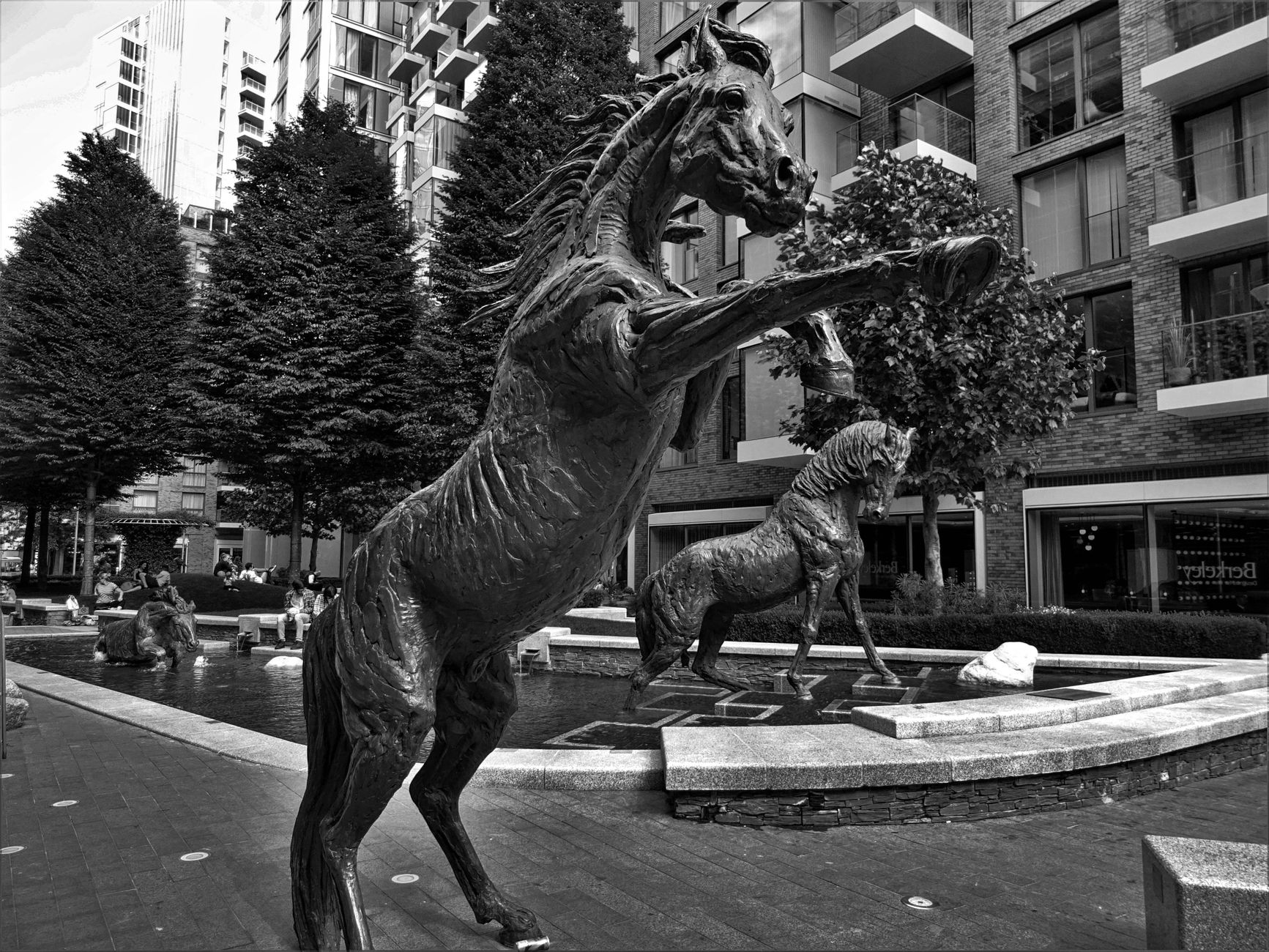
A horse sculpture can be a personal gift, an equestrian award or a familiar presence on a shelf. Choosing one becomes easier when you know which purpose matters most. Someone who follows racing may appreciate a horse and jockey, while a rider might prefer a figure connected to their own discipline. A collector may care most about the shape, material or relationship to other objects.
Start with the recipient and the intended setting before comparing individual pieces. Pose, scale, surface and personalization all affect whether a sculpture feels appropriate. A thoughtful choice should make sense when the wrapping is gone and the object has found its place in everyday surroundings.
Find the connection before choosing the pose
Ask what horses mean to the person. Their interest could involve a particular animal, years of riding, family memories or an appreciation of equestrian art. These connections lead to different choices. A piece that recalls a shared experience can carry more meaning than one chosen only for its size or elaborate detail.
If the gift marks an achievement, identify the activity accurately. Racing, dressage and jumping have distinct visual associations. A general horse figure may suit a broad expression of thanks, while an event award can benefit from a closer relationship to the discipline. Consult someone familiar with the activity if the pose or equipment is outside your experience.
For a view of the range of subjects available, Hit Trophy’s Horse Statues category includes horse heads, standalone horses and figures associated with riding and racing. Those differences offer a useful way to begin narrowing the subject. Decide which kind of scene belongs in the recipient’s story before judging decorative details.
Read the silhouette as well as the detail
Look at the outline from a distance. A raised foreleg, extended neck or rider leaning forward changes the character of a piece even before you notice the surface. Ask whether the overall impression suits the person and the place: active, restrained, formal or playful. There is no single pose that carries the same meaning for every recipient.
Then examine the details that will remain visible in the actual display position. A sculpture on a high shelf may be seen mainly from below; a piece on a desk will be viewed at close range. Request additional photographs if the available image shows only one side. A design should work from the angles people will actually see.
Avoid relying on universal claims about what a pose symbolizes. You can explain your own reason for choosing it, such as its resemblance to a favorite horse or its connection to an event. That personal explanation is more useful than assigning a fixed meaning to every raised hoof or turned head.
Measure the whole display space
Height is only one part of fit. Check the sculpture’s width and depth, including any projecting head, tail or equipment. Compare those dimensions with the shelf or tabletop, allowing space around the object. A compact base can support a figure whose upper portions extend much farther than expected.
Use a paper template to mark the footprint on the intended surface. For a gift, ask someone who knows the space to take measurements. Consider nearby books, lamps and framed photographs as well as the available surface. The sculpture needs enough room to be seen and enough clearance to avoid accidental contact.
For an award ceremony, remember that stage presence and home display are separate considerations. A piece that photographs well at presentation still needs to fit in a car and on a shelf afterward. Ask about packaged dimensions and weight if the recipient will travel with it.
Distinguish the material from its appearance
A metallic appearance does not establish that a sculpture is solid metal. Read the product specification for the body, base and surface finish separately. Words describing color or appearance may tell you little about construction. If the listing is unclear, ask the seller for the underlying material and the recommended use.
This distinction matters for care and placement as well as preference. Do not assume that a decorative object is suitable for a garden, stable entrance or damp room because it resembles an outdoor sculpture. Confirm the intended environment with the supplier. For a piece with several materials, ask for care instructions that account for the whole assembly.
Use personalization to preserve a specific memory
An inscription can record an event, an achievement or the relationship behind the gift. Decide what someone should understand years later, when the presentation itself is no longer fresh. A name, occasion and date may provide all the context needed. A brief personal message can work well when it adds something those details cannot.
Keep the wording proportionate to the available plate. A small base may support only a few readable lines. Draft the text before approving the sculpture, then ask how it will fit. If the full event title is lengthy, discuss an accurate shortened version with the organizer instead of making the lettering too small.
For a memorial gift, check the recipient’s preferences with particular care. Confirm the horse’s name, dates and any chosen wording with someone close to the person. Give them room to prefer a simple sculpture without an inscription. The appropriate level of personalization depends on the relationship and occasion.
Check the practical details before ordering
A short set of questions can resolve uncertainties that photographs leave open. Keep the answers with the final proof so that everyone approving a group gift is working from the same information.
- What are the complete dimensions and finished weight, including the base?
- What materials and finishes are used, and where is the piece intended to be displayed?
- How large is the personalization area, and can a proof show the actual line breaks?
- What packaging is provided for storage or travel after the presentation?
- Which cleaning and handling instructions apply to this particular sculpture?
Build the delivery plan around the occasion rather than the last possible arrival date. Allow time to inspect the piece, compare the inscription with the approved wording and resolve any damage or error. Keep the packaging until the recipient has transported it safely.
Plan handling and care around the object
The Canadian Conservation Institute’s guidance on handling heritage objects recommends examining an object for weak areas before moving it and using strong, solid areas for support. Although written for collections, that principle is useful when thinking about a decorative sculpture. Projecting legs, tails or attached equipment should not be assumed to be safe lifting points.
Follow the manufacturer’s directions for the specific piece. Avoid selecting a polish simply because the surface looks metallic or using a cleaning product intended for a different material. If instructions are missing, ask the supplier before experimenting. Choose a stable display surface where the object is unlikely to be knocked during ordinary activity.
Choose a piece with a reason behind it
A well-chosen horse sculpture connects subject, scale and occasion. The figure should relate to the person, the dimensions should fit the space and any inscription should explain something worth remembering. Those choices give the object a clear place in the recipient’s life.
When you present it, share the reason for the selection. A few words about a remembered horse, a completed season or years of support can make the connection clear. The sculpture then carries a story the recipient recognizes, alongside a form they can enjoy seeing every day.