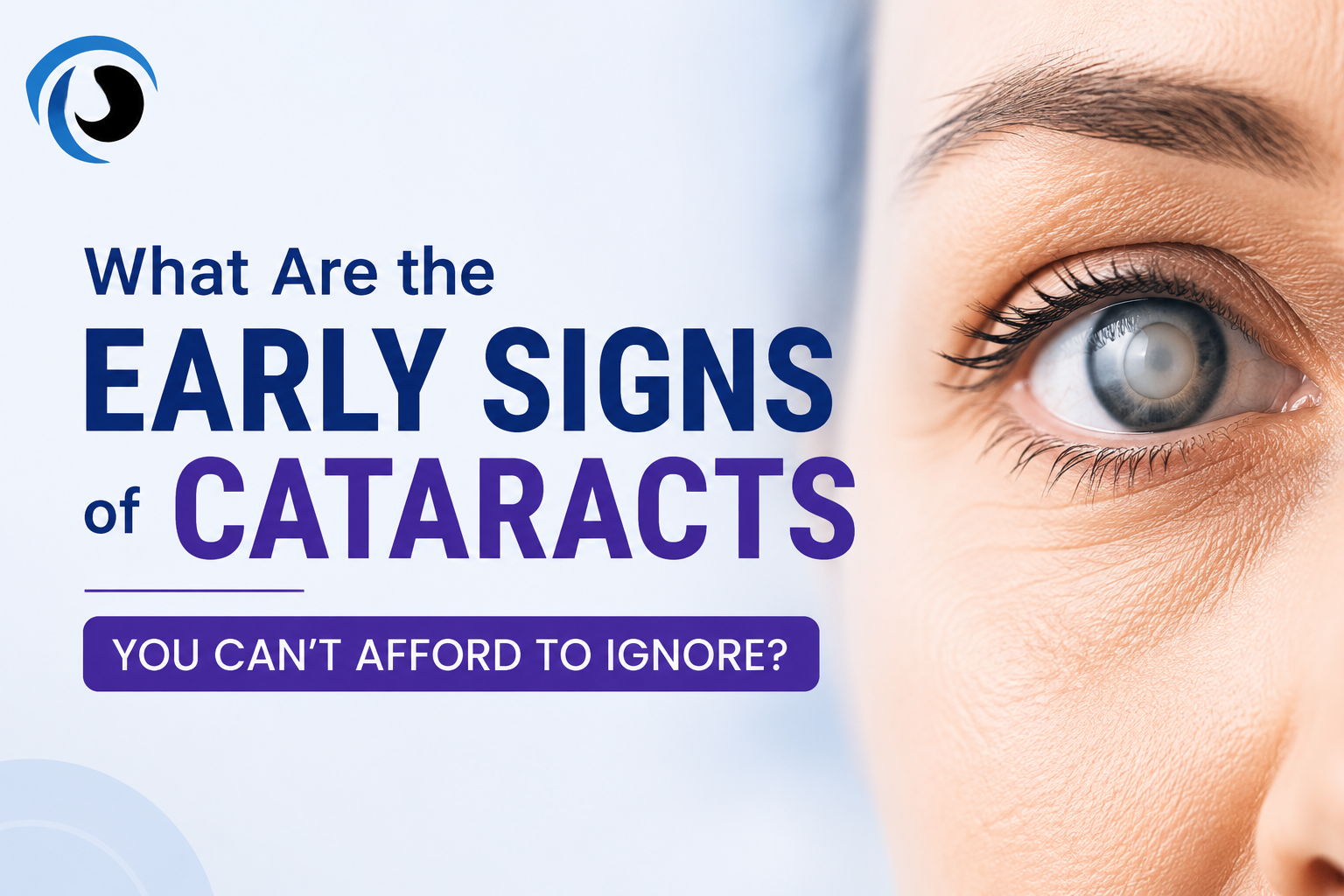
The eyes aren’t necessarily changing quietly for years; the cataract develops gradually.
Blurred vision, glare while driving at night, faded colours, or frequent changes in spectacle power may initially be mistaken for normal ageing or the need for new glasses. Recognising the early signs of cataracts can help you seek an eye examination at the right time and make informed decisions about treatment.
Catching the early signs of cataracts lets you keep your options open and your vision safer for longer.
8 Early Signs of Cataracts You Need to Be Aware Of
- Cloudy vision gets the better of you
Suddenly, reading small print, road signs, or your phone screen is a real challenge.
- Colours appearing faded or yellowish
Colours look duller than they used to, and whites can take on a yellowish or brownish tint, especially with blues looking washed out.
- Difficulty seeing or driving at night
Night driving starts to feel like a challenge, needing brighter light for reading. Books, menus, and medication labels start needing more light and more effort than they used to.
- Frequent changes in spectacle prescription
A lens power that keeps changing
- Double vision in one eye
You might see 2 overlapping images in one eye alone
- Halos around lights
Streetlights and headlamps start to have a bright ring around them after dark.
- Reduced contrast or difficulty seeing in dim environments
You need brighter light to read comfortably
- Increased sensitivity to glare
Bright sunlight, headlights, or indoor lights may start to feel unusually harsh or uncomfortable
What Causes Cataracts To Develop?
Cataracts are a normal ageing process that every individual gets in their life.
However, below are some factors that speed the development of cataract, they are as follows –
- Long-term diabetes
- Prolonged steroid use, whether as tablets or eye drops
- Eye injuries
- Previous eye surgery
- Use of tobacco
- Unprotected sun exposure
- Certain inherited conditions that affect your eyes
- Congenital cataracts, which some babies are born with
How Long Can You Have A Cataract Before It Affects You?
- Cataracts usually develop gradually and may cause little or no noticeable visual difficulty in their early stages.
- Age-related changes in the lens can begin during middle age, while significant symptoms often become more noticeable later in life.
- However, the rate of progression varies considerably from person to person.
Can Cataracts Be Reversed Without Surgery?
No. Currently, there are no proven eye drops, supplements or eye exercises that can reverse a cataract once it has formed. In the early stages, symptoms may often be managed with an updated spectacle prescription, brighter lighting, and anti-glare measures.
When the cataract begins to interfere with everyday activities such as reading, driving, working or recognising faces, cataract surgery may be recommended.
During surgery, the cloudy natural lens is removed and replaced with an artificial intraocular lens (IOL).
Can You Reduce Your Risk of Developing Cataracts?
While age-related cataracts cannot always be prevented, certain lifestyle measures may help support overall eye health and reduce modifiable risk factors.
- Wear UV-blocking sunglasses and a hat in sunlight
- Eat meals rich in antioxidants: dark leafy greens, nuts, and citrus fruits for vitamins C and E, lutein, and zeaxanthin
- Avoid smoking and limit excessive alcohol consumption.
- Keep diabetes and blood sugar levels well controlled.
- Get your eyes checked regularly after you turn 40.
Best Surgery To Remove Cataracts
Phacoemulsification (Phaco)
Phacoemulsification, or Phaco, is the standard cataract surgery procedure worldwide. A tiny ultrasound probe breaks up the cloudy lens, which is then removed through a tiny incision and replaced with a new artificial lens. Vision usually starts to settle within a week
Other Surgical Options
- FLACS (Femtosecond Laser-Assisted Cataract Surgery): Uses a femtosecond laser to perform selected steps of cataract surgery
- MSICS (Manual Small Incision Cataract Surgery): a stitch-free, no incision process for cataract surgery
- ECCE (Extracapsular Cataract Extraction): an older, larger-incision method for advanced cases
When Do You Need to See a Cataract Surgeon?
If any of these symptoms appear, consult with a cataract surgeon in Delhi NCR before your vision starts to deteriorate in a way that’s hard to ignore.
- Your eyes have been feeling blurry
- Driving at night is just tough.
- There are halos around lights
- Everything looks dull and washed out
- Frequent changes in specs number
- You notice double vision
Why Is a Retina Examination Important Before Cataract Surgery?
Cataract is not always the only reason for reduced vision. Conditions affecting the retina, including diabetic retinopathy, age-related macular degeneration, epiretinal membrane and other macular disorders, may also influence the visual outcome after cataract surgery.
A comprehensive eye examination before surgery helps the ophthalmologist assess both the cataract and the health of the retina so that patients have realistic expectations about their likely visual outcome.
For patients looking for a cataract surgeon in Delhi NCR, AK Institute of Ophthalmology (AKIO) is eye care hospital in delhi specialised in comprehensive cataract assessment, retinal evaluation and modern cataract surgery. Led by Padma Shri Dr. Atul Kumar, former Chief of the Dr. R.P. Centre for Ophthalmic Sciences, AIIMS, New Delhi, with 41+years of experience in the diagnosis and management of retinal conditions.Known as best retina speicalist in delhi. Dr. Aman Kumar is an AIIMS-trained ophthalmologist and PGIMER Gold Medalist with expertise in cataract and vitreoretinal care.