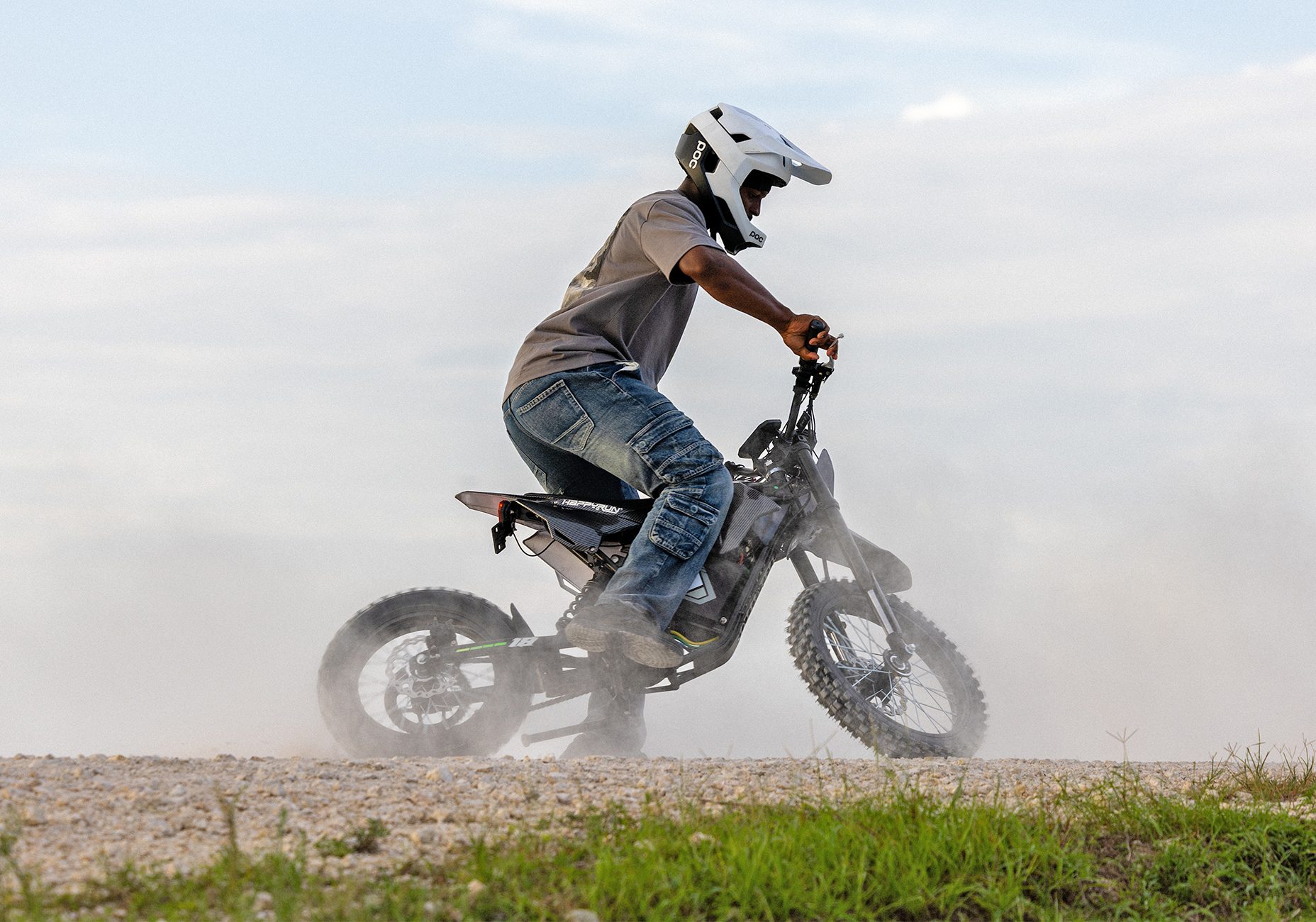
The question usually gets framed as which one is “better,” but that’s the wrong comparison. Electric and gas dirt bikes solve the same basic problem — get a rider over rough terrain — in genuinely different ways, and which one fits depends less on which is objectively superior and more on how, where, and how often someone actually plans to ride.
Power Delivery Feels Completely Different
A gas engine builds power through an RPM range, which means a rider has to work with a clutch and gearbox to keep the engine in its power band — too low and the bike bogs, too high and it’s harder to control. An electric motor skips all of that. Twist the throttle and torque is available immediately, with no clutch to feather and no gear to hunt for.
On technical terrain, that difference is noticeable. Smooth, linear power delivery makes it easier to modulate exactly how much torque reaches the wheel through a rocky section or a tight switchback, without also managing clutch engagement at the same time. A gas bike rewards riders who’ve built that clutch-and-throttle coordination — it’s a real skill, and one some riders specifically want to develop — but it’s an extra layer to manage while also reading the trail.
Noise Changes Where and How You Can Ride
This is one of the most immediately obvious differences. An electric dirt bike runs dramatically quieter than a gas engine, quiet enough that conversation at a stop doesn’t require raising your voice. That matters more than it might seem: some private land, community trail systems, and neighborhoods near riding areas are simply more tolerant of electric bikes because they don’t carry the same distance or duration of engine noise.
The trade-off is worth naming honestly — a quiet bike also gives less audible warning to other trail users, hikers, or wildlife sharing the same terrain. Riding a quieter bike doesn’t remove the need for the usual awareness around blind corners and shared trail sections; if anything, it puts more of that responsibility on the rider.
Maintenance: Oil Changes and Carburetors vs. Batteries and Software
A gas dirt bike has a real maintenance rhythm: oil changes, air filter cleaning, spark plug replacement, carburetor or fuel system upkeep, and periodic valve adjustments, on top of the usual tires, brakes, and chain wear every dirt bike sees. None of that is optional if the bike is going to keep running well.
An electric dirt bike skips the combustion-related items entirely — no oil, no spark plugs, no carburetor to keep clean. What it asks for instead is different, not absent: reasonable charging habits, keeping the battery from sitting fully depleted for long stretches, and the usual tire, brake, and chain wear common to any bike. Overall, electric ownership tends to mean fewer routine service items, but less maintenance isn’t the same as no maintenance.
Range and Refueling: Minutes at the Gas Can vs. Hours on the Charger
A gas tank refills in minutes, and carrying a spare gas can extends a ride indefinitely — which makes gas bikes genuinely well suited to long, remote, or multi-day riding where charging access isn’t a given.
An electric dirt bike has a fixed range per charge, and recharging takes meaningfully longer than a fuel stop, often measured in hours rather than minutes. For local trail riding within a bike’s comfortable range, that’s rarely an issue. For longer or more remote rides, it means planning matters more — knowing the route ahead of time, budgeting a reserve, or arranging charging access rather than assuming a quick top-off is always an option.
Learning Curve for New Riders
A new rider on an electric dirt bike has one less system to learn at once — no clutch, no gear shifts, just throttle, brakes, and body position. That tends to shorten the learning curve for the basics of balance and trail reading, since there’s less happening at the controls while everything else is still new.
That’s not a knock on gas bikes. Clutch and throttle coordination is a genuine skill, and some riders — especially those planning to eventually ride more advanced gas dirt bikes or race — deliberately want to build it from the start. The easier learning curve on electric is a real advantage for a first bike, not evidence that gas riding skills aren’t worth having.
So Which One Actually Fits You?
For riders prioritizing quiet operation, lower routine maintenance, and power delivery that’s easy to modulate on technical terrain — especially for local or moderate-length rides — an electric dirt bike tends to fit well. Modern electric options have closed a lot of the old power gap, too: HappyRun’s G300 Pro, for example, runs a 6500W-peak motor with about 120 N·m of torque and a top speed up to 50 mph, with 60-plus miles of range for exactly this kind of riding.
For riders who need the fast, indefinite refueling that long or remote trips call for, or who specifically want to build clutch-and-throttle skill on the way to more advanced riding, a gas bike still holds real advantages. Even a capable electric dirt bike for trail riding can’t fully replace those strengths in every situation.
Either way, checking local rules on where a given bike — electric or gas — is actually allowed to ride is worth doing before buying, since off-road vehicle regulations vary by area regardless of power source.
The Right Choice Depends on the Ride, Not the Hype
Neither category is the universal answer, and treating this as “electric is strictly better” or “gas is strictly better” misses the point. The more useful question is which set of trade-offs matches how a rider actually plans to use the bike — mostly local or mostly remote, mostly quiet neighborhoods or wide-open land, mostly beginner-friendly or deliberately skill-building.
For riders leaning electric, browsing HappyRun’s electric dirt bike models is a useful way to compare today’s quieter, lower-maintenance options with what gas bikes have traditionally offered.