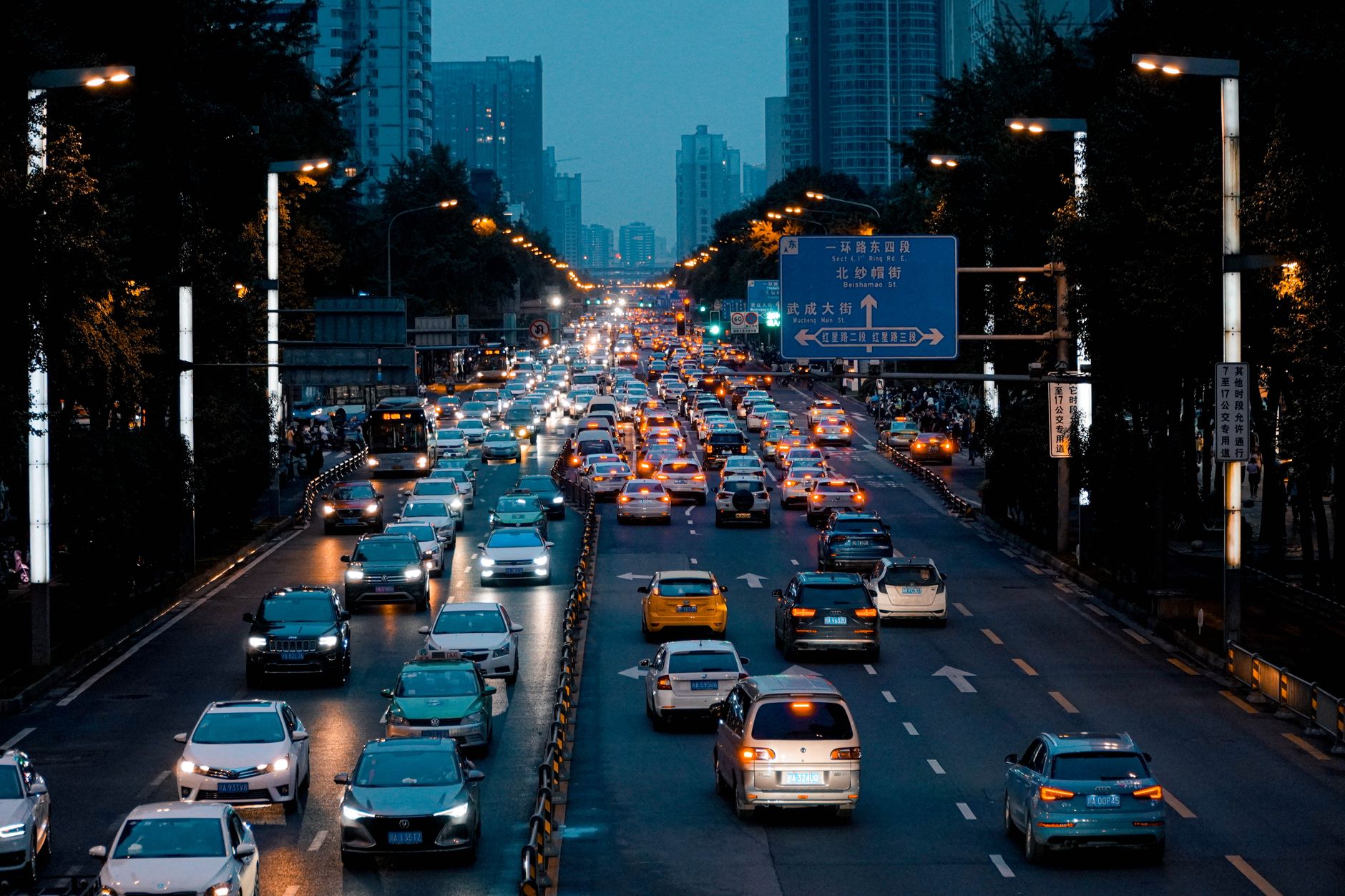
In urban environments around the world, there are increasing numbers of people using personal vehicles to travel for work, shopping, to and from school, and for recreational activities. Inevitably, as numbers of vehicles on the road increase, so too do levels of traffic congestion, leading to longer travel times and greater levels of frustration on the road. Traffic congestion in turn contributes to a range of additional environmental problems including increased air pollution, higher levels of fuel consumption, greater levels of noise, and the generation of additional greenhouse gases.
In terms of tackling traffic congestion, the use of public transport can play an enormous role in enabling increased amounts of people to travel within urban environments without generating excess amounts of pollution. A recent study by diamondpartybus in Toronto revealed a startling connection between the percentage of bus travel in the city, and the level of pollution in that city. A bus by deficition carries large amounts of people, so for instance instead of there being hundreds of cars moving around a city such as London, there could be just hundreds of buses. Therefore, as has already been stated, public transport is extremely efficient in terms of space usage.
The Connection Between Traffic Congestion and Air Pollution
A description of congestion on roads is given above. To summarize, when a road is congested, vehicles travel slowly, stop frequently, and idlet for long periods. In other words, in congested traffic, vehicles do not travel in a smooth and continuous manner, rather they travel in fits and starts. Furthermore, idling contributes to increased fuel consumption and emissions.
As more cars use the road, fuel consumption and emissions increase. When cars are forced to travel at slow speeds, to frequently stop and start, they can increase their fuel consumption and produce more emissions. This can lead to serious problems for air quality, particularly in areas with a high concentration of cars.
Many of the pollutants that affect local air quality are a direct result of road transportation. These include pollutants such as nitrogen oxides, carbon monoxide, particulate matter (PM10 and PM2.5) and a number of greenhouse gases, such as carbon dioxide.
Reducing the number of vehicles on the road to improve traffic flow and to reduce transportation-related pollution is important and bus transportation can play a large role in this.
How Bus Transportation Reduces the Number of Vehicles
Reducing Idling and Stop-and-Go Traffic for Environmentally Conscious Travel. Employees traveling to work could use a company shuttle rather than traveling to work in their own cars. In addition, instead of each student traveling to and from school in their own car, they could travel in school buses. Tourists traveling to and from the same attractions could also travel in coach buses rather than in rental cars.
Supporting More Efficient Use of Road Space
Transportation, such as buses, also uses road space more efficiently. One of the main ways that a bus can utilize road space more efficiently is that instead of requiring as much space as a number of cars on the road, a bus can in fact carry the same number of people using up far less space on the road. In many urban situations, the roads are already at capacity. This means that instead of having to try and add more lanes (which can be very expensive to do and in many cases can be very disruptive to other road users), the only real way to try and improve matters would be to try and make more efficient use of the space that is already there.
Many urban roads cannot be widened to accommodate more cars. The roads already exist in heavily built-up areas and could be used much more efficiently to move people around in fewer vehicles.
Using road space effectively, improving access to bus and travel options, and improving the reliability of bus services across a city is important for supporting group travel. This could include using dedicated bus lanes, prioritizing public transport at traffic signals, and building good quality bus stops that support use of buses by both current and potential public transport users.
The Role of Modern Bus Technology
New bus technologies help improve fuel efficiency and cut down on harmful emissions. This is why event transport, or wherever people need to travel, increasingly is provided by means of the latest models of buses.
Further, in urban locations where buses are running 16 hours a day and normally would be producing noise and emissions from their engines, they can run as completely silent and emission-free battery electric buses for hours at a time.
However, the environmental benefits of a bus can be affected by a number of different factors. For example, the production of the electricity or fuel for the bus, the distance that it travels, the number of people that it can carry and how efficiently the bus travels along the route.
Public Transit and Everyday Commuting
According to the Government of Canada, cleaner transportation options can help reduce greenhouse gas emissions, improve air quality, and support a more sustainable transportation system. Publis buses are an important component to the urban transportation system. By providing an alternative to driving on the roads, public bus systems help to reduce the amount of traffic on the roads in urban centers.
Frequent, affordable, comfortable public transportation that can be linked to other modes of transport to complete a journey is likely to influence the choices of people traveling alone for work-related purposes and encourage them to travel by public transport rather than by car.
However, buses can also serve to improve access to a wide array of destinations, both employment and otherwise, and thus contribute to improved social and economic mobility in a host of ways.
School and Employee Transportation
School buses and employee shuttle services can also reduce traffic congestion. Without school buses, students would travel to and from school in separate family vehicles. During morning and afternoon peak hours, this would add to existing traffic congestion, especially around schools.
Congestion from parents driving their children to and from school can be greatly reduced with the use of school buses.
Employee shuttles can also travel from places like work sites, transit stations, hotels, homes, and shopping centers to and from major places of work, such as offices, factories, airports, hospitals, warehouses, and construction sites.
By making shared transportation the most convenient option for travel to and from work, for example, organizations can reduce parking demand and help support more sustainable forms of travel.
Charter and Coach Buses for Group Travel
For larger groups, they can be used for things like tours, conferences, and even for weddings and other social occasions. This can include school trips, sports teams, and even corporate events.
While charter bus service is not a substitute for public transportation, it does help cut down the number of personal vehicles that travel for a single event or trip. For a single event or trip, traveling in group by charter bus is far superior to having every individual in the group travel separately in their own car or trucks.
Ride sharing can also help to reduce traffic congestion around key event destinations as well as reducing the need for a large number of parking spaces for each individual’s vehicle. Finally, a group traveling by bus can also be organized and kept to a strict schedule of departures and arrivals.
Buses are the most flexible form of transportation. All other forms of transportation can be reached by bus. In addition to public transit, there are also school buses, employee shuttles, charter buses and coach buses. Shared travel by bus makes best use of available road space thus reducing the number of journeys on the road and associated pollution and congestion.
Investing in good quality bus services for growing cities can provide solutions to help create cleaner, less congested and connected cities.