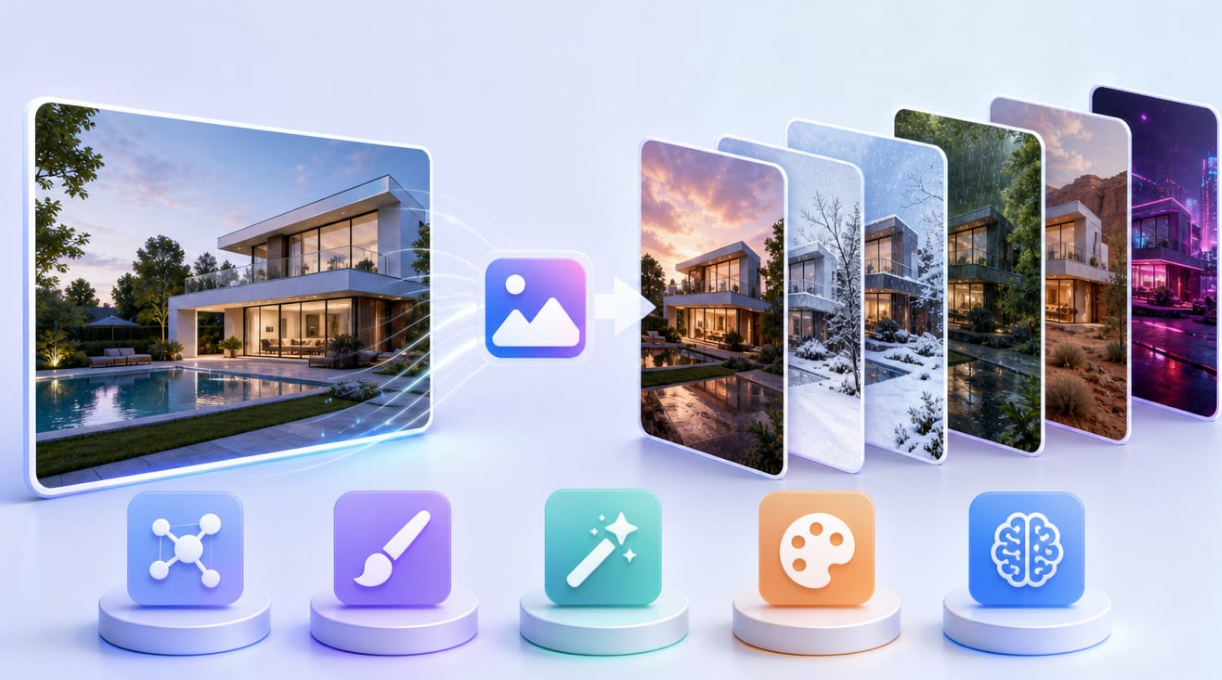
The evolution of image to image generation has redefined modern creative production by replacing traditional manual editing workflows with highly adaptive neural rendering systems capable of interpreting both visual structure and textual intent. In 2026, these platforms are no longer experimental tools but core infrastructure for agencies, studios, and independent creators who rely on scalable visual output. From marketing campaigns to cinematic pre-visualization, image to image generators now support complex transformations such as style transfer, background reconstruction, object replacement, and lighting recalibration while preserving structural integrity of the original input. This technological shift has created a competitive ecosystem where platforms differ significantly in rendering precision, prompt comprehension, workflow efficiency, and creative flexibility. As demand for high-volume visual content continues to grow across digital platforms, selecting the right system is no longer optional but strategic. The following analysis evaluates five leading solutions based on their technical architecture, usability, and real-world production value.
1. Pollo AI
Pollo AI is a next-generation all-in-one image to image generator designed to unify the entire creative production pipeline within a single intelligent workspace. Instead of relying on a single diffusion model, it integrates a wide ecosystem of leading AI engines—including Pollo Image 2.0, GPT Image 2, Nano Banana 2, FLUX, Stable Diffusion, Recraft, Ideogram, and more—allowing users to dynamically switch between models depending on the desired output style, realism level, or artistic direction. This multi-model architecture positions Pollo AI as a flexible transformation hub where a single uploaded image can be reimagined into cinematic visuals, stylized illustrations, ecommerce product shots, anime scenes, or marketing creatives. The platform also supports advanced Image to Image AI, Text to Image AI, Video to Video AI, and Reference to Video workflows, enabling cross-modal content generation beyond static imagery. In addition, Pollo AI includes AI-powered editing tools such as background removal, object editing, image enhancement, and style transformation, all accessible through a simple prompt-driven interface. A key differentiator is its integration of 2,000+ LoRA styles, giving users extremely granular control over artistic direction—from emojis and profile pictures to fantasy characters and commercial product environments. This makes Pollo AI not just a generator, but a full-scale AI creative infrastructure designed for high-volume production.
Why it stands out
Pollo AI stands out because it merges generation, editing, and optimization into one streamlined workflow powered by multiple AI models, including the GPT Image 2 model. Its key advantage is workflow consolidation, allowing users to produce diverse visual styles without switching platforms. This is especially useful for marketing teams and agencies creating UGC ads, product visuals, Facebook creatives, testimonial videos, and YouTube outro content at scale. The platform also supports Image to Video AI, AI Animation Generator, Photo to Video Avatar, and AI Video Editor, extending its use from static images to full video production. Combined with efficiency gains such as reduced editing time and improved engagement, Pollo AI delivers strong performance for professional content pipelines that require both speed and consistency.
2. Nano Banana 2
Nano Banana 2 is designed as a highly expressive and stylized image to image generator that prioritizes artistic creativity over strict photorealism. Its core positioning is centered around generating visually striking, emotionally engaging, and trend-driven outputs suitable for social media, branding, and digital art. The system is optimized for interpreting vivid textual prompts that include color theory, atmospheric styling, fashion references, and surreal conceptual directions. Unlike conventional generators that focus on accuracy and realism, Nano Banana 2 emphasizes aesthetic exaggeration, allowing users to produce highly saturated compositions, neon-lit environments, and stylized illustrations with strong visual identity. The model maintains structural integrity from input images while applying significant stylistic transformation, making it ideal for creators who want to preserve composition but dramatically alter mood and tone. It also features strong spatial awareness, ensuring that added elements remain visually coherent within the original scene layout.
Why it stands out
Nano Banana 2 stands out due to its strong alignment with modern internet visual culture and its ability to generate content that feels instantly shareable and platform-native. It is widely used by influencers, digital artists, and branding teams who prioritize visual differentiation in highly saturated social media environments. The platform excels in producing campaign-ready visuals with strong emotional impact, making it particularly effective for fashion marketing, music promotions, and experimental advertising concepts. Its stylistic control mechanisms allow users to lock in specific aesthetic directions such as retro-futurism, cyberpunk, or editorial minimalism, ensuring consistency across multiple generated assets. This makes it ideal for building cohesive visual identities across campaigns. Additionally, its rapid iteration capabilities allow creators to explore multiple design variations quickly, making it a powerful tool for brainstorming and concept development in fast-paced creative industries.
3. ChatGPT Image 2
ChatGPT Image 2 functions as a conversational image to image generator that transforms visual editing into a dialogue-driven experience rather than a technical prompt engineering process. Built on advanced multimodal intelligence, it allows users to upload an image and modify it using natural language instructions without requiring structured syntax or specialized formatting. The system interprets user intent contextually, translating conversational input into precise visual modifications while maintaining coherence with the original image structure. It supports iterative refinement, meaning users can continuously adjust outputs through follow-up instructions instead of rewriting prompts from scratch. This makes it highly accessible to non-technical users while still maintaining strong performance for professional applications. The model is capable of handling complex modifications such as object replacement, environmental adjustments, and lighting changes while preserving character identity and spatial consistency.
Why it stands out
ChatGPT Image 2 stands out due to its iterative conversational workflow, which significantly reduces friction in the creative process. It is particularly effective for brainstorming, storyboarding, and rapid prototyping where ideas evolve dynamically over time. Users can refine outputs step by step, making it ideal for creative directors, writers, and designers who need to explore multiple visual directions quickly. Its strong instruction adherence ensures that even highly detailed requests involving multiple elements are executed accurately. This makes it suitable for tasks such as advertising mockups, narrative visualization, and product concept iteration. The platform also excels in maintaining context across multiple editing steps, allowing for a coherent evolution of visual ideas. As a result, it serves not only as a generation tool but also as a collaborative creative assistant that supports ideation and refinement within a unified conversational environment.
4. Runway
Runway is a professional-grade image to image generator designed primarily for cinematic production, visual effects, and high-end commercial content creation. Its architecture is built to analyze depth, texture, and lighting information from input images, enabling it to reconstruct scenes with a strong emphasis on realism and cinematic quality. The system allows users to manipulate camera perspectives, adjust environmental lighting, and transform static images into dynamic visual compositions suitable for film and advertising industries. It also supports advanced masking tools that enable precise regional editing, giving creators control over specific elements within a frame. Runway’s rendering engine is optimized for motion-aware transformations, ensuring that generated outputs maintain consistent spatial logic and physical realism even under complex modifications. This makes it a preferred choice for studios working on storyboarding, concept visualization, and pre-production design.
Why it stands out
Runway stands out due to its strong alignment with professional filmmaking workflows and its ability to simulate cinematic lighting and camera behavior with high fidelity. It is widely used in advertising agencies, production studios, and VFX teams that require production-ready visual assets. Its key advantage lies in its ability to maintain realism while applying large-scale transformations, such as altering weather conditions, time of day, or camera angles without breaking scene consistency. This makes it particularly useful for narrative visualization and commercial campaign development. Additionally, its support for advanced depth mapping and texture reconstruction allows for highly accurate visual modifications that meet broadcast standards. For professionals who require precise control over visual storytelling elements, Runway provides a stable and technically advanced environment that bridges the gap between traditional filmmaking and AI-driven production.
5. Stable Diffusion
Stable Diffusion is an open-source image to image generator designed for maximum flexibility, customization, and technical control over the generative process. It allows users to run models locally or deploy them within customized cloud infrastructures, making it highly adaptable for developers, researchers, and advanced digital artists. The system supports extensive model fine-tuning through community-driven checkpoints, plugins, and extensions such as ControlNet and IP-Adapter, which enable precise control over pose, structure, and composition. Its architecture is highly modular, allowing users to adjust parameters like denoising strength, guidance scale, and latent space configuration to achieve highly specific outputs. This makes it suitable for technical workflows where precision and repeatability are more important than ease of use. However, it requires a strong understanding of generative model mechanics to fully leverage its capabilities.
Why it stands out
Stable Diffusion stands out due to its unmatched level of customization and its open ecosystem of community-driven innovation. It is widely used in research environments, technical art production, and enterprise-level pipelines where full control over generative behavior is essential. Its biggest advantage is the ability to build highly specialized workflows tailored to specific industries such as architecture, game design, and industrial visualization. Users can generate everything from rough sketches to highly detailed photorealistic renders with precise structural control. Additionally, its inpainting and outpainting capabilities allow for seamless image expansion and localized editing without disrupting global composition. This level of flexibility makes it one of the most powerful and adaptable systems in the image to image landscape, particularly for users who prioritize control over automation.
Conclusion
The image to image generator landscape in 2026 reflects a clear diversification of creative priorities across different user groups. Platforms like Pollo AI focus on workflow integration and production scalability, while Nano Banana 2 emphasizes stylistic expression and trend-driven aesthetics. ChatGPT Image 2 introduces conversational intelligence that simplifies iterative design, whereas Runway targets cinematic realism and professional filmmaking standards. Stable Diffusion, on the other hand, remains the most flexible and technically powerful option for users who require deep customization and open-source control. Together, these tools illustrate how generative imaging has evolved into a multi-layered ecosystem where no single platform dominates all use cases. Instead, each system excels within a specific creative niche, enabling users to choose based on workflow complexity, artistic intent, and production requirements.