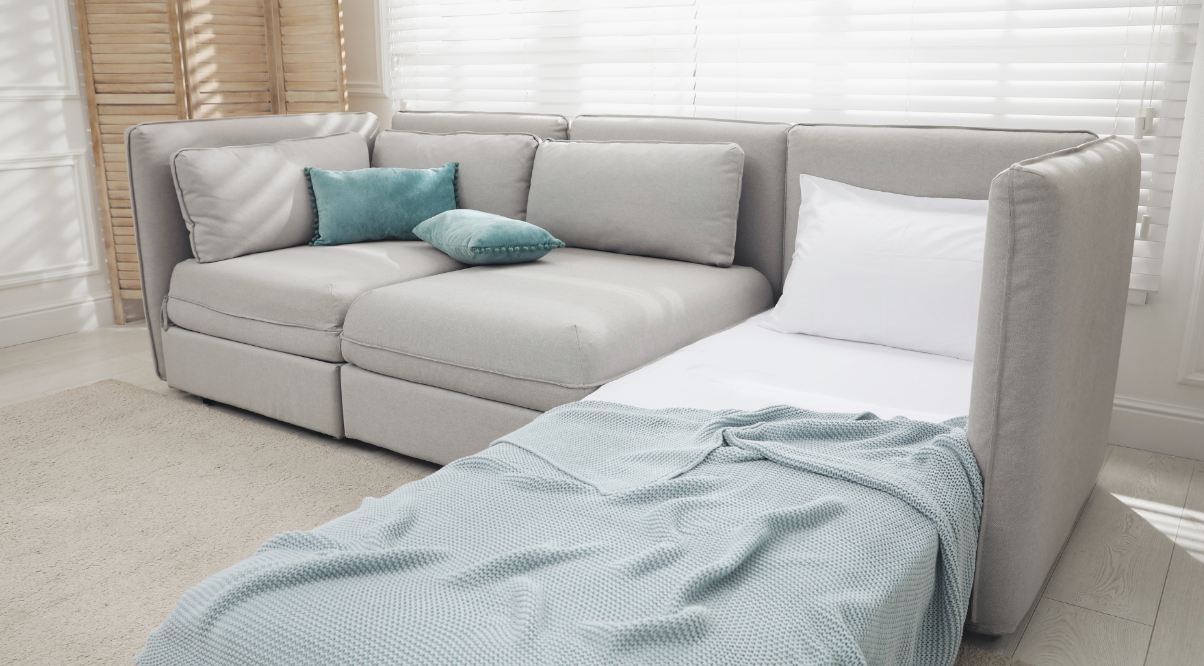
Modern homes have a tough job. They’re asked to be offices, guest rooms, lounges, and storage units, sometimes all at once. If you’re working with a studio apartment, a spare room that moonlights as something else entirely, or a living space that needs to stretch in multiple directions, your furniture simply has to pull its weight. That’s exactly where a sleeper sofa with chaise earns its keep, blending comfort, flexibility, storage, and real style into one genuinely useful piece.
A sleeper sofa with chaise is one of the smartest furniture choices for modern homes. It combines comfort, style, and functionality in a single piece, making it ideal for apartments, guest rooms, and family living spaces. Many homeowners today prefer multi-purpose furniture because it helps save space while improving interior aesthetics. Brands like 1 Inch are becoming increasingly popular for offering stylish and practical sleeper sofa designs that suit contemporary lifestyles.
Here’s a stat that says a lot: 71% of residential buyers point to space constraints as their top reason for choosing multifunctional furniture. Nearly three-quarters of people buying furniture are thinking about square footage first. That’s not a trend, that’s the new normal.
City Furniture’s collection runs the full range, twin to king sizes, leather to microfiber upholstery, high-density foam to innerspring mattress options. There’s a reason this category keeps growing. Exploring a quality sleeper sofa with a chaise is honestly one of the sharpest moves you can make when upgrading a living space without blowing your floor plan.
Let’s get into exactly why.
Relax in Style: The Comfort-Forward Design of a Sleeper Sofa with Chaise
Here’s the thing nobody tells you about standard sofas: your legs have nowhere good to go. You’re either perched upright, draped over the armrest awkwardly, or hunting around for an ottoman that never quite lines up. A sleeper sofa with chaise just solves that. Full-body support. Built right in. No negotiations.
Built-In Lounging Without the Extra Pieces
The chaise extends your seating into a single, unified stretch of furniture. You’re not balancing on a separate piece that slides away mid-movie. Whether you’re deep into a binge-watch or winding down before bed, the support is consistent and genuinely comfortable, not something you have to work around.
Pop-Up and Trundle Mechanisms That Actually Work
Remember that metal bar problem? You know the one, where traditional pull-out sofas somehow manage to poke you right in the back, regardless of how you position yourself.
Pop-up trundle systems in modern chaise sleepers lift from beneath the seat, creating a nearly bed-level surface without destroying your cushions or your spine. Setup takes under a minute. That’s not marketing language; it really is that fast with current mechanisms.
Comfort gets you interested. But once you see how smartly this piece fits into a tight room, that’s when you’re sold.
Live Large in Small Spaces: How a Sleeper Sofa with Chaise Maximizes Square Footage
This isn’t just a sofa. It’s a sofa, a guest bed, and frequently a storage unit, occupying a single footprint where three pieces used to live. For studios, open-plan apartments, and multi-use rooms, that trade is almost too good.
One Piece, Three Functions
Small rooms don’t have the luxury of dedicated zones. A sectional sleeper chaise visually carves up an open-plan space the same way a wall might, without actually closing anything off. It defines the room. That’s genuinely useful design, not just a sales pitch.
Layout Smarts: Clearance and Orientation
Measure before you buy, seriously, this step matters. Chaise pop-up mechanisms typically need 6–8 feet of floor clearance. Sofa-body pull-outs often require 8–11 feet. Most pieces come in left-arm facing (LAF) or right-arm facing (RAF) configurations, so think about how your room flows before committing to an orientation. Modular options add even more flexibility if your layout is unconventional.
Nailing the floor plan is a genuine win. But here’s the bonus nobody expects, this sofa might also quietly solve your clutter problem.
Declutter with Purpose: Storage Beneath the Chaise
Hidden storage is one of those features you don’t appreciate until you have it, and then you can’t imagine going back. The lift-up chaise compartment in most models holds blankets, pillows, and guest linens right where you actually need them. Out of sight. Instantly accessible.
Less Furniture, Cleaner Rooms
Every multifunctional piece you add means one less standalone storage item cluttering your space. Fewer Ottomans. Fewer dressers crammed into corners. Less visual noise overall. It’s a clean solution, not a workaround dressed up to look like one.
| Feature | Traditional Sofa + Guest Bed | Sleeper Sofa with Chaise |
| Seating Capacity | Standard | Equal or greater |
| Sleeping Surface | Separate mattress needed | Built-in |
| Storage | Requires extra furniture | Integrated under the chaise |
| Floor Space Used | 2–3 pieces | 1 piece |
| Setup Time for Guests | 15–30 minutes | Under 2 minutes |
Storage handled. Now let’s talk about the moment that actually tests your furniture, when guests show up without much warning.
Always Be Guest-Ready: Transition from Sofa to Bed with Ease
No more hunting for the air mattress pump at 11 pm. No pulling a fold-out frame from a closet you’ve already jammed full of other things. A sleeper sofa with a chaise converts smoothly, quickly, and without drama, which is the whole point.
Quick Conversion for Real-Life Moments
Family sleepovers, last-minute overnight guests, post-holiday gatherings that stretch past midnight, these things happen. Your furniture should handle them without forcing you to rearrange the entire room. That convenience is genuinely stress-reducing in a way that’s hard to quantify until you’ve lived it.
Mattress and Topper Upgrades for Better Guest Sleep
A 2–3 inch memory foam topper placed over the pull-out mattress makes a meaningful difference in sleep quality. If you’re choosing a model from scratch, compare your options: innerspring sleeps cooler and firmer, memory foam contours more closely to the body, and hybrid mattresses split the difference nicely for guests with different preferences.
A great guest experience only holds up if the sofa itself is built well enough to back it. That brings us to materials and construction.
Built to Last: Materials, Mechanisms, and Maintenance
The best features in the world don’t matter if the frame warps after two years or the mechanism starts sticking after regular use. Longevity comes down to what’s inside and what you do to maintain it.
What to Look For in Construction
Kiln-dried hardwood frames resist warping and cracking better than alternatives. High-resilience foam holds its shape across years of use. Performance fabrics, microfiber, and treated weaves, especially, handle stains and daily wear far better than untreated upholstery, particularly in households with kids or pets.
Keeping It in Shape
Rotate cushions every few weeks to distribute wear evenly. Wipe down upholstery regularly, don’t wait for a spill to remind you. Test the sleep mechanism every couple of months so you catch any stiffness before it becomes a real problem.
Design That Moves with Your Taste
Clean lines, neutral palettes, and modular styling mean these pieces adapt as your preferences shift. Many manufacturers offer customizable fabric options, the same silhouette, completely different feel depending on your home.
Durability gives you a foundation. But today’s sleeper sofas are pushing beyond the basics in genuinely exciting ways.
Touches of the Future: Trending Features in Today’s Sleeper Sofas
The U.S. furniture market was estimated at USD 180.55 billion in 2025 and is projected to reach USD 292.26 billion by 2033. A meaningful slice of that growth connects directly to innovations now standard in modern sleeper sectionals.
Smart Add-Ons Worth Having
Built-in USB charging ports, reclining sections, and hidden compartments are increasingly standard rather than premium upgrades. They make the sofa useful at every hour, not just when someone needs a place to sleep.
Reversible Chaises and Modular Flexibility
A reversible chaise means you’re not permanently locked into one configuration. Move apartments, redecorate, flip the orientation, same sofa, new setup. That kind of adaptability has real long-term value.
With all these features on the table, it helps to have a practical checklist before you commit to anything.
Instant Reference: Feature-Driven Buying Checklist
Before you order, run through these:
– Mattress thickness: Aim for 5 inches or more, or plan to add a topper.
– Mechanism type: Pop-up, pull-out, or click-down, each suits a different frequency of use.
– Orientation: Confirm LAF or RAF based on your room’s actual layout before ordering.
– Storage: Check whether the under-chaise compartment is standard or an upgrade.
– Upholstery: Match fabric to your household, performance weaves for busier homes.
– Delivery access: Measure doorways, hallways, and stairwells before purchase day.
Final Thoughts on the Sleeper Sofa with Chaise
Choosing a sleeper sofa with a chaise isn’t a compromise; it’s honestly a sharper call for how modern homes actually function. Daily comfort, guest-ready sleeping, discreet storage, durable construction, and design that doesn’t shout “multifunctional furniture” from across the room. It delivers all of it without demanding more space or a dramatically larger budget. For anyone trying to get real mileage out of their living area, this is a solution that genuinely holds up.
Frequently Asked Questions
Can you change which side the chaise is on after purchase?
Some models feature reversible chaises that can be reconfigured, but most fixed sectionals cannot be switched post-purchase. Always confirm reversibility before ordering, especially if you anticipate room layout changes.
Will sheets stay on the pop-up sleeper section?
Standard fitted sheets often slip on pop-up surfaces. Deep-pocket fitted sheets or those with elastic all the way around tend to stay put much better on thinner, pop-up-style mattresses.
Is a sleeper sofa with a chaise practical for nightly use?
It can work for nightly sleep, especially with a quality topper. For primary everyday sleeping, a hybrid or memory foam mattress option combined with a 2–3 inch topper provides adequate long-term comfort.