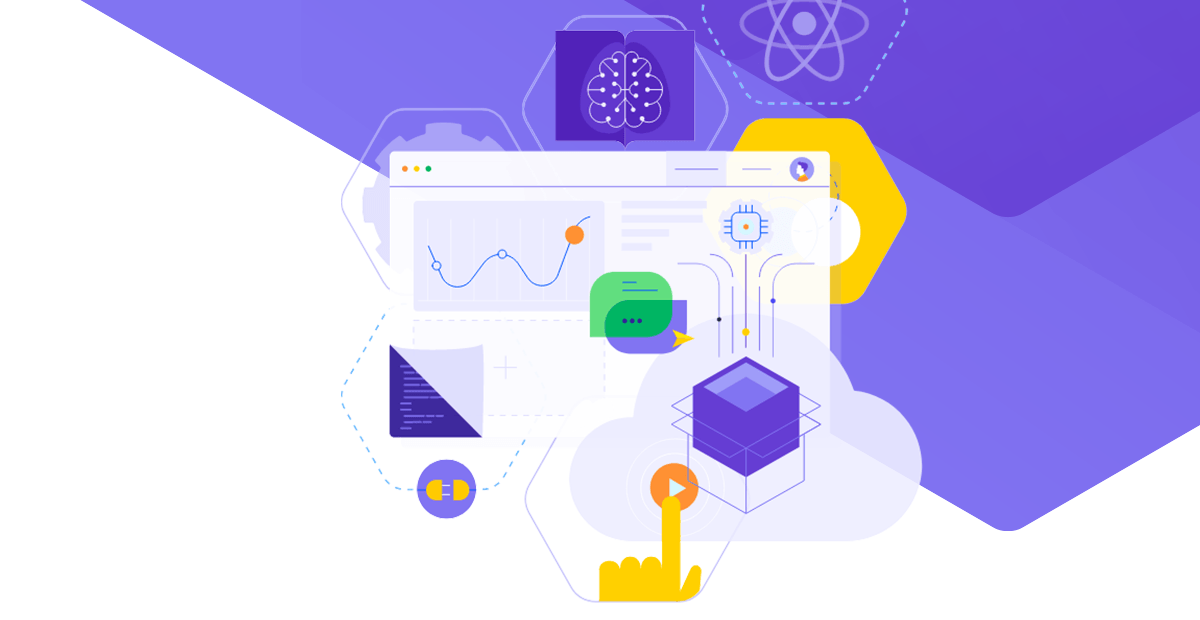
Modern marketing rarely succeeds because of a single tool. It succeeds because of systems. Behind every effective campaign you see online, there is usually a connected stack of tools quietly exchanging data, triggering actions, and refining decisions in real time. When these tools are properly integrated, marketing stops feeling like a collection of separate tasks and starts functioning like a coordinated engine.
To understand this better, it helps to stop thinking in terms of individual platforms and instead think in terms of roles. Each tool has a job. Some collect data, some interpret it, some act on it, and some measure what happened after the action. A unified marketing system is simply what happens when those jobs are connected in a continuous loop instead of being isolated steps.
The foundation: data collection and customer visibility
Everything starts with data. Every click, view, purchase, form submission, and email open is a signal. On its own, each signal is not particularly meaningful. But when combined, they form a picture of customer behavior.
This is where tools like analytics platforms and customer data platforms (CDPs) come in. They gather raw behavioral data from websites, apps, and ads. They also often connect with CRM systems that store known customer information like email addresses, purchase history, and lead status.
Without this layer, marketing decisions become guesswork. With it, marketers can begin to understand patterns like:
- Which channels bring the most valuable customers
- Where users drop off in a funnel
- What content leads to conversions
- How long it takes someone to buy after first interaction
But collection alone is not enough. Data has to move.
The brain: integration and data unification
Once data is collected, the next challenge is making it usable across systems. This is where integration tools and marketing platforms become essential.
In a fragmented setup, your email tool does not talk to your ad platform. Your CRM does not know what happened on your website. Your analytics data sits separately from your content system. The result is slow decision-making and inconsistent messaging.
A unified system solves this by syncing data across tools. When systems are integrated, a single customer action can update multiple platforms at once. For example:
- A user downloads a guide on your website
- The CRM updates their profile
- The email system triggers a nurture sequence
- The ad platform adds them to a remarketing audience
- The analytics dashboard logs the conversion source
This is where something like GMP integration with Blaze becomes relevant in practice, because it represents how marketing ecosystems connect planning, advertising, and content workflows into a single operational layer instead of separate silos.
The goal is not just connectivity for its own sake. The goal is reducing delay between insight and action.
The engine: automation and campaign execution
Once data is flowing, automation becomes the engine that turns information into action.
Marketing automation tools handle repetitive but important tasks like:
- Sending email sequences based on behavior
- Segmenting audiences dynamically
- Triggering ads based on engagement
- Updating lead scores in CRMs
- Personalizing website content
This is where marketing becomes scalable. Instead of manually responding to every user action, the system responds automatically based on rules.
For example, if someone visits a pricing page three times but does not convert, the system might:
- Send a comparison email
- Show a targeted ad with a discount
- Notify a sales rep in the CRM
- Adjust the lead score upward
None of this requires manual intervention once it is set up. That is what makes unified systems powerful. They do not just store information, they react to it.
The voice: content and messaging systems
Content is where strategy becomes visible. But in a unified system, content is not created in isolation. It is guided by data.
Content management systems (CMS), social media tools, and AI content platforms often sit on top of analytics insights. They help marketers decide:
- What topics to write about
- What format performs best
- When to publish
- Which audience to target
When connected properly, content tools also feed performance data back into the system. That means marketers can see which blog posts lead to conversions, which videos retain attention, and which social posts drive traffic.
This creates a feedback loop. Content is not just produced, it is continuously refined based on real-world performance.
The amplifier: advertising platforms
Paid media platforms like Google Ads, Meta Ads, and programmatic networks are often where integration becomes most visible.
In a disconnected system, ads are based on broad targeting and assumptions. In a unified system, ads are driven by actual user behavior.
For example:
- Visitors who abandoned checkout can be retargeted with specific messaging
- High-value customers can be excluded from discount campaigns
- Lookalike audiences can be built from CRM data
- Ad spend can shift automatically toward higher-performing segments
When ad platforms are connected to CRM and analytics systems, they stop being guesswork machines and start functioning as precision targeting engines.
The intelligence layer: analytics and optimization
Analytics tools do more than report what happened. In a unified system, they guide what should happen next.
Dashboards track:
- Conversion rates across channels
- Customer acquisition costs
- Lifetime value
- Funnel drop-off points
- Attribution paths
Attribution is especially important. It answers the question: which touchpoints actually influenced a conversion?
Without integration, attribution is often inaccurate or overly simplistic. With integration, it becomes possible to see the full journey:
someone sees an ad, clicks a blog post, opens an email, then converts days later.
This level of clarity is what allows marketers to optimize budgets intelligently instead of relying on intuition.
Why the system matters more than the tools
It is easy to get caught up comparing platforms. One email tool versus another. One analytics dashboard versus another. One automation tool versus another. But in reality, the effectiveness of marketing rarely depends on individual tools.
It depends on whether those tools are working together.
A well-integrated system:
- Reduces manual work
- Improves personalization
- Speeds up decision-making
- Increases ROI from existing traffic
- Creates consistent customer experiences across channels
A disconnected system does the opposite. It creates delays, data gaps, inconsistent messaging, and wasted ad spend.
The bigger shift: from campaigns to continuous systems
Traditionally, marketing was campaign-based. You launched something, measured results, and moved on. But unified systems have shifted marketing into something more continuous.
Now, campaigns are just entry points into ongoing systems that adapt over time. A user does not just see one ad or receive one email. They enter a structured journey that evolves based on their behavior.
This shift is subtle but important. It means marketing is no longer about isolated bursts of activity. It is about maintaining a living system that responds in real time.
Final thoughts
When marketing tools are connected properly, they stop behaving like separate software and start behaving like one coordinated intelligence layer. Data flows freely, actions are automated, content adapts, and advertising becomes precise.
The real advantage is not just efficiency. It is coherence. Every part of the system understands what the other parts are doing, which makes the entire operation smarter than any single tool inside it.
And once that level of integration is achieved, marketing becomes less about managing tools and more about managing outcomes.